

FaceTime with Heidi Merrick
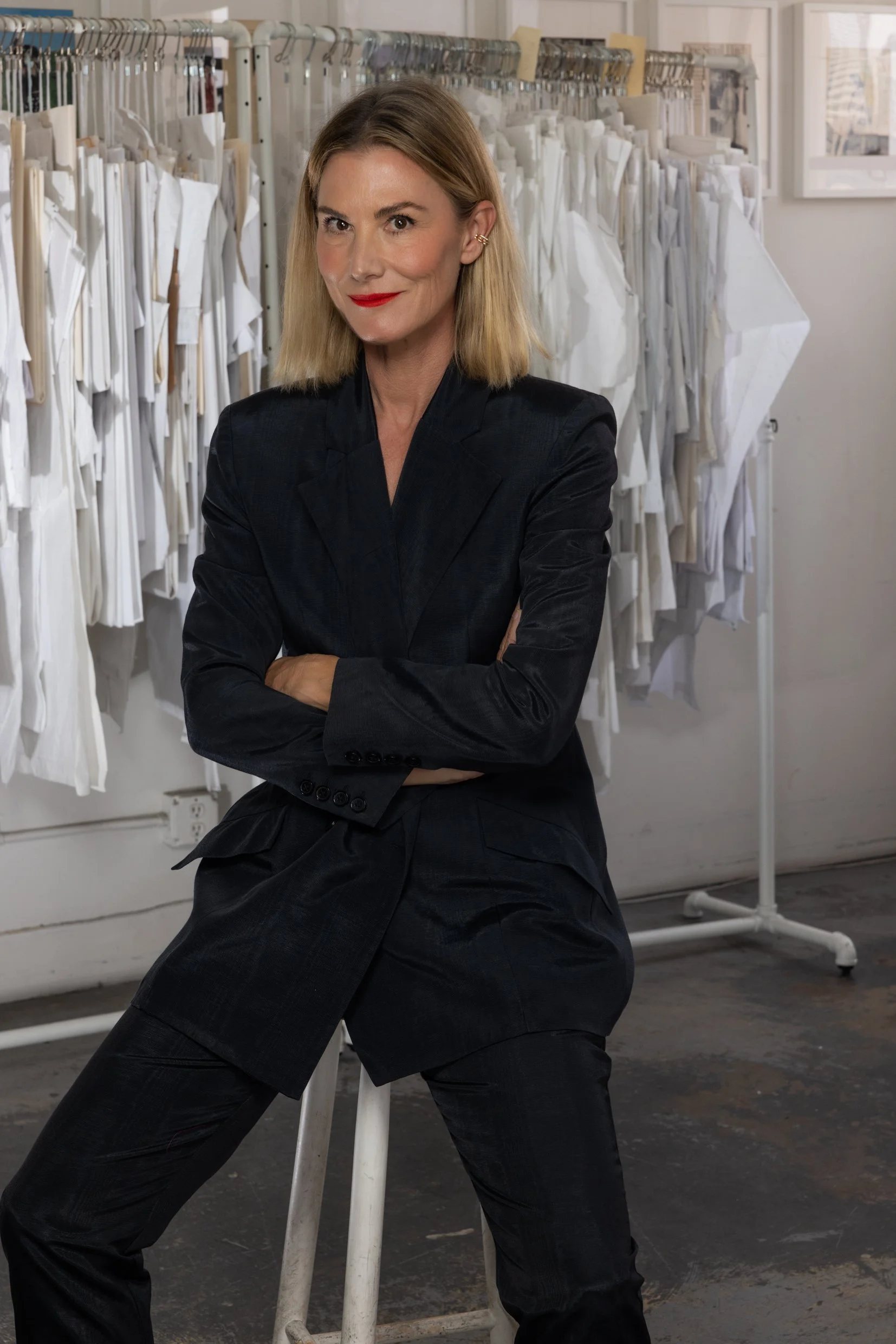
For our latest “FaceTime With,” The Retaility’s founder Lindzi Scharf caught up with fashion designer Heidi Merrick, whose work is worn by Eva Mendes, Meghan Markle, Kristen Bell, Cindy Crawford, Selena Gomez, and Abigail Spencer.
The duo discussed Merrick's Southern California-based clothing company, her journey to fashion after graduating from L.A. Trade Tech, how her business has evolved over the last twenty years since its 2006 launch, her upbringing in Carpinteria, her surf legend father Al Merrick's influence, the role of motherhood, what’s on the horizon, and much more.
This conversation followed their recent missed connection at Merrick’s Summerland-based store when Scharf was in town for a public speaking engagement at Godmothers bookstore.
Keep scrolling to join their conversation. You can also watch it here.
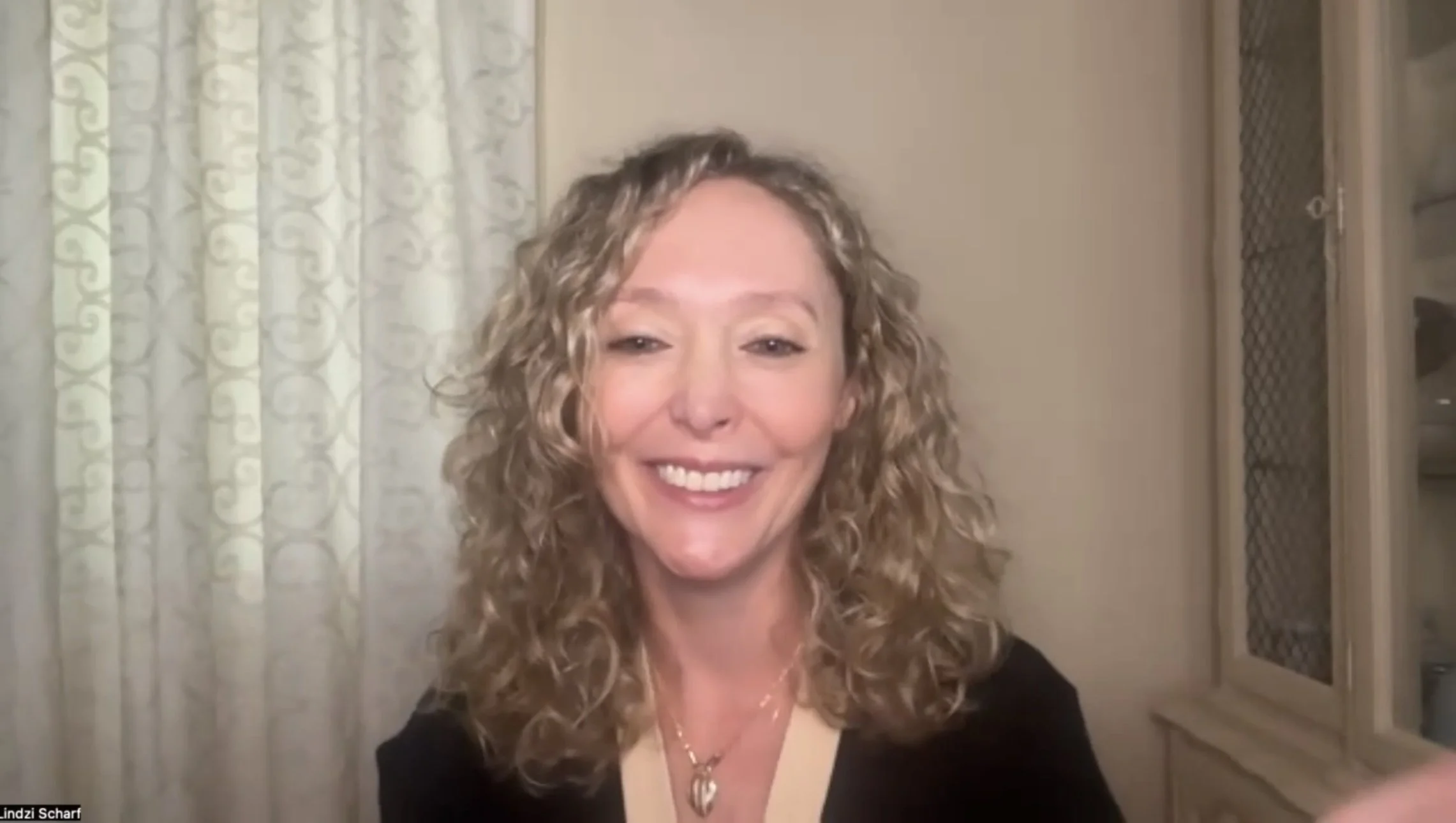
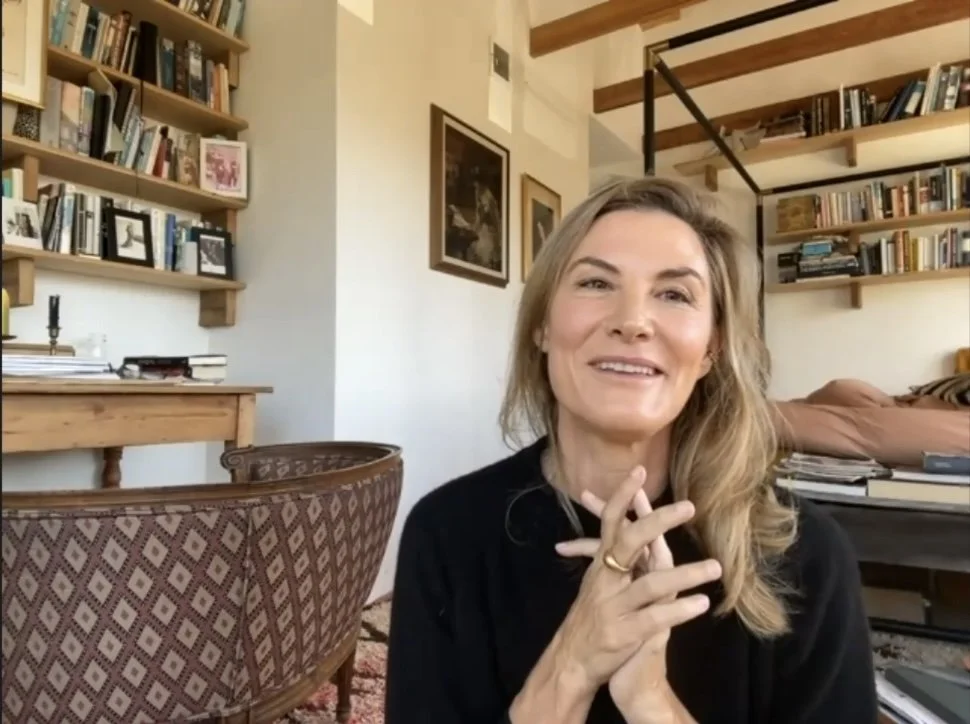
LINDZI SCHARF: It's so nice to actually see you. It's been so long.
HEIDI MERRICK: I'm so sorry that we had that missing person's thing. Literally, you were in a door, out a door, crossing the street.
LS: I know. No, we really were. And for context, I was doing, as you know, this event at Godmothers, which is literally right next door to your beautiful store. I thought, ‘I have to see Heidi.’ But on days like that [when I’m doing a public speaking engagement], it was, as you know, a heavier topic. So that's why I had to get into whatever headspace [right before]. But it's just nice to actually see you. Thanks for doing this. I knew of you for many, many years. And then Abigail Spencer, I don't know if you remember, was so…
HM: I remember.
LS: She was so thoughtful. She seated us next to each other at a dinner, and it was so nice to finally put a face with a name. So let's talk, let’s backtrack because I know that [when] you started your business, [it] was based in Los Angeles, but you grew up in Carpinteria. So let's talk childhood. Let's really backtrack. What about your childhood informed who you are today?
HM: Oh, gosh, that's interesting. I mean, really, I'm living in my hometown, so everything of my childhood is informing every day. You know what I mean? I have the same beach view that I grew up with. So my neighbors were people [who] rode big wheels on my driveway, and there's a real blessing to being in a small town where you know everyone for what feels like 100 years. Because there's an accountability, and then there's the vision of growth, where you see people from [childhood] to [adulthood], and you see all their successes and struggles. And that brings a reality of life into your point of view. When you really know people, it's not just a movie, it's not a celebrity, it's not a dream. It's like, ‘This is life.’ And these are people, and they're beautiful, and they're functioning. It's been really wonderful to be in my childhood [hometown] again.
LS: I mean, it's such a special [place]. I can't blame you. I toy with the idea of being Los Angeles adjacent because it's just such a special area. And then, it's so funny because when [my husband heard] your last name—he's around fashion through work, but he doesn't know fashion. And he [said to me], ‘Merrick? Any chance she's related to [Al Merrick, the legendary surfboard shaper]? And he's the one who—way back when—clued me into the fact that you come from a surf family as well. Growing up, how much awareness did you have of the family, I guess, legacy?
HM: I mean, it's never really legacy when it's your family, right? It's really just your dad and your mom trying to make money and be good people. I wasn't really [aware]… That's not true. I was aware that my dad was really good at what he did, and I was aware that everyone in the world considered him the best in the world at what he did. And that comes with a lot of good and bad, right? It comes with 100 doors and windows open that I have that other people don't have that perspective of: if I try, I can be great, you know? I've thought if I put my mind to it, I can be great. And across the board, I thought that about everything, and I failed at so many things, you know? And I've had successes in some things, same as my dad, but I think I always go back to that idea that people regarded my dad as really, really gifted. And that makes me feel gifted. The same way, when you're talking to your kids, you try to talk positively about yourself. You try to, in front of them, respect yourself, respect your life, respect your work, so that they do that for themselves, and they feel that it's inherited, and that was a real gift for me. A lot of the community were kind about who my dad was, and then I got to know all the great surfers.
LS: Oh, right.
HM: Which was awesome. When you're a teenage girl, and you have a surf team around you, it's pretty much the best thing in the world. I think it's the envy of every girl I've ever known. So that was super-duper fun. … It was bitching.
LS: I love it. 2007 is when you launched your company, correct? And so what were you doing before that moment?
HM: I lived in New York. I moved to New York the day I turned 18. And in New York, I was doing plays and theater and studying art. I was just living in La Va artist. And that was really fulfilling and wonderful for me. I still draw back on that time. If you can see [behind me], I still draw and do art, and it's still what brings me culture and life. I was really failing, though, at making money at that, and where I made money was always in fashion. I had a gift for it. I worked for my dear friend, Jennifer Smith. She went from Hearst to Condé Nast. We worked for a lot of magazines, and I was her stylist assistant. And she taught me fashion. She said things to me that I say on shoots, and I said yesterday on the shoot. I say all the time when I pull stuff out of the trunk, and back then we used to get trunkloads of clothes, and everything was wrapped in four sheets of tissue. To my girls in the store, I hold the clothes, and I make sure to give it a wiggle, and I say, ‘This is our money maker. This is our livelihood. Respect the clothes.’ And that's what she said to me the first day: ‘Respect the clothes.’ It was a magical spark where I realized, ‘This is life giving to me, and this is going to build my life.’ And it did.
LS: 20 years. It is a wild thing because I'm sure in a lot of ways, it's like the blink of an eye, and a hundred years ago, too. So how has the aesthetic or business evolved for you from the early days? What do you remember about the early days?
HM: I remember so much. I remember working so hard, and I still work hard, but in those days, it was more specific. I would sew the clothes all night long before I had a photo shoot. I sewed every sample for maybe the first four years. And then if someone wanted [something custom]… I had a ringer of a dress that was a high-dollar dress. [Whenever] people wanted it, I'd say, ‘Let’s just cut it. I'll sew it. I'll sew it tonight.’ So there are people walking around [in] early Heidi Merrick that I was excited that they bought something, [so I personally] sewed it. And I had an assistant at some [point who] was like, ‘You can't do this. This is very stupid.’ I have the same sew team and cut team that I had 20 years ago. Wow. It makes me want to cry thinking about it. The neighbor was a designer. … He was very cool. He was older than I was. But [it was] neighboring my studio in downtown LA. And he had Artemio [Hernandez], my sewer. I could tell he was winding down [since he was] an older gentleman. And so Artemio was getting less and less time [there]. And I said, ‘As you get less time, can you come help me?’ And it was me getting off the sewing machine and him getting on. And he's still my sample sewer.
LS: Wow. I don't think most people can say that. That's incredible.
HM: Yeah, and when I left that seat [that was] the last [time]. Sometimes I think about it. There's the last time I left that seat.
LS: Oh, wow. I mean, it is emotional. Would you ever [return to that seat]? I mean, I guess there's no reason to return to that seat when you have [a team].
HM: Oh my gosh, I'm so [emotional]. I can't believe I even cried over this.
LS: No, it's okay. We're probably talking about things that in a lot of ways you haven't thought about [for a long time], right? Like, it's going to bring up [emotions].
HM: I have a suitcase of clothes here from the last time I packed. I'm going to wipe my eyes [with it]. I can't believe I made myself [cry]. What a dork.
LS: The other day [I was] doing one of these, when somebody was saying something, [and] I—out of nowhere—started tearing up. When you feel it, you feel it.
HM: I'm probably projecting a little bit of life onto that because it is your life when you reflect on your work; you're reflecting on your life. But where that really matters, obviously, is your children. And my daughter's 16. She's an exchange student this summer.
LS: What? Where is she? Oh, my gosh. Amazing.
HM: She's in France, having a great time, just raging.
LS: [I’m] mildly jealous. That sounds incredible, but that's hard as a parent. My son is four. I'm not prepared for when he's making decisions and going places. So, I feel you. So, actually, motherhood, I did want to touch upon that, too. How did motherhood then start influencing work? Whether it was visually or also just in terms of logistics? How has motherhood played its part in your life?
HM: I was never going to be a mom that had [a] career over my children. I was never going to be a human that [put my career ahead of] my children or my family in my life, and I respect people [who] are like that. I'm not judgy about it. I'm rootsy enough that that has to be my place. So, my entire career, I've been like, ‘When the kids go [I’ll go full throttle].’ A little bit of that, you know? And then my son, if I'm being candid, had asthma when he was really young. And that was in and out of the hospital all the time. And [it’s] partially why I was ready to move up here. The air here was much better for him. Now he's strong and amazing, with soccer, and he surfs and bikes. He’s strong. Maybe had we not changed the air for him, that wouldn't have happened. That said, I love being in L.A. in my L.A. studio more than anything in the world. Perrine [Van Opstal], who heads up the design studio there, is a beautiful soul. … When we're together, and we're working, we're all making clothes, and I'm there; the day goes by [so quickly]. I step out [of] the elevator, and then all of a sudden, it's getting dark, and I have to drive home.
LS: That is the best feeling. When you're in your element, and you're doing what you love, I get that.
HM: Yeah, it's tough for me. I do live in Carpinteria [and] my design studio is in Los Angeles. So, there are sacrifices that I've made to have a family and a stable family and a healthy family that I stand [by], but not without a little bit of [sacrifice]. [I feel like], ‘God, that is where I am my best self.’ I work. I love working. I come from a hardworking family. My mom is beautifully hardworking. My dad is an artist. And that's where I feel inflow. That comes easily to me. It's not that I'm isolated here—I have the retail team, as you know. I don't have that daily going in that I once had, and it's probably better, because no one wants me selling samples, you know?
LS: Fair. Yeah, you've evolved from that. And I get all that. As far as family, it's interesting. For me, I was a reluctant mom. I didn't know that I wanted to be a mom. And it was only once I became a mom—and we won't get into too much today—but it was only once I became a mom that I realized… One: how badly I wanted to be one. And two: that, of course, kids are going to come before career. I was ambitious, and my career always mattered so much, but what's the point of any of it? I don't know. It just puts things into perspective for me. And again, to each their own; everyone does all of this differently. That's why I love hearing different perspectives. But you and I, it sounds like, are of the same ilk in terms of [supporting our kids]. [I feel strongly that] this little being becomes a human in this world. You want to give them every opportunity you can. It should be, in my opinion, about them – while still maintaining that ambition. You wind up prioritizing. And by doing that, you actually, at least for me, I thrive that much more with what I'm doing because you're saying no to the things you should have been saying no to. And yes to the things that are going to help everything evolve – your little humans and your first baby, your business. That's my thought process on it. And then let's talk style for a minute. How would you personally describe your aesthetic?
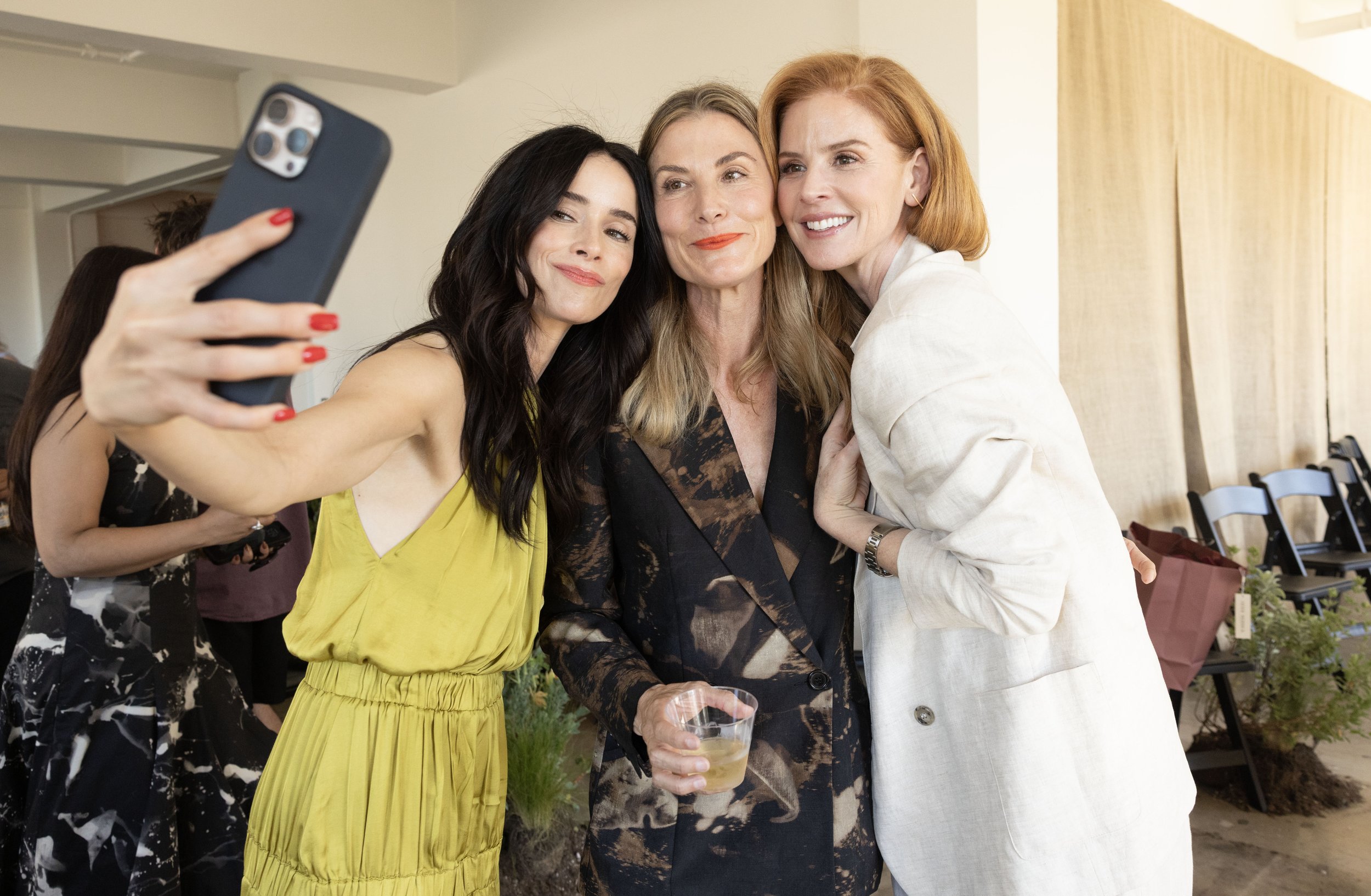
Designer Heidi Merrick pictured with Abigail Spencer and Sarah Rafferty. Photo by Elizabeth Lippman.
HM: It's so interesting to talk about your aesthetic, because it's really your point of view, so you don't [know how others view it]. I'm aware that I don't see other people's point of view. I'm aware that I [have] a strong aesthetic, but I can't define it because it is coming from… it is my impetus. It is naturally my inspiration, what I think is beautiful. I think that's why I'm an independent designer. I've never taken on [an investor]. I've never taken on having a boss. I've never taken investment. I haven't brought in a creative director, per se, because I realized, ‘I don't want to be told what to do.’ I still feel like I'm on an art project, and it might have already taken me 20 years, but I'm still trying to say something. Sometimes I think that holds me back. I don't want to do the perfect show or the perfect collection, or whatever, because then what will I strive towards? There's a little bit of joy in the strife, which I don't know if that's right in the world. As an artist, I don't know if that's the correct way to go about life. I'm on the fence about that, but I have [a strong vision] for sure. I'm aware that I'm trying to say something in this world, but I'm not 100% sure what it is. Like, [I don’t know how it’s interpreted by] someone from the outside.
LS: I get what you're saying. I think, too, as we all evolve as human beings, that influences your work. And so, it's probably constantly in motion in a way too. And certainly, like any piece of art, the way someone else is going to interpret that piece may differ from how you view it. So I get that.
HM: Yeah. I am aware of how I'm seen in the world. I'm aware that I grew up in a surf world, and I grew up in a beach town, and I live a California lifestyle. I'm aware of the incoming [outside perspective] of that, the vision of that. And I do think my goal in it, not to say what my aesthetic is, but my goal has always been to get the beach kid to represent, to show up for life. [To] just bring it. Sometimes when it's a dress, it's the little surfer girl being elegant, learning, ‘This is a natural fiber. It's a cool silhouette.’ You don't feel ridiculous. You're not going to feel like you're in a pompom walking out onto the beach. I try to make it vibey enough that my people will wear it, but elegant enough that it feels aspirational to me. So that's my point of view on it. I struggle explaining the aesthetic. That's where it comes from.
LS: Well, I think that's why people bring in marketing—people who can label things in a digestible way. But everything you just said makes absolute sense. And then I always like to ask people, what have you learned about yourself in the last year?
HM: You know what? You asked me that last year.
LS: Oh, my gosh, I did! That's right, I did. I love that you knew that. Thank you for remembering. Every year at the end of the year, I do a big roundup [story asking friends], ‘What have you learned about yourself this year?’ I think it was two years ago, or was it last year?
HM: It was a while [ago]. It definitely was a gift to me that you asked me that because sometimes you don't stop and think about what you're going through or about what you should do, which is sad. But [what] I have learned about myself [is] what I touched on [earlier today] about the studio. I really love the process of working. I am very grateful now. Whereas sometimes, like, ‘I need to work.’ Now I realize my respite is work.
LS: I get that. Same. 100%. I love talking to people. I love hearing people's stories, but more recently, [I’ve been] spending a little time carving out time to tell an important story to me. And it's meditative. It's like something else takes over. So that is the respite. I get that.
HM: I've realized my work isn't front-facing. I like people. That's a great, positive thing. I love the women who wear my clothes, and I honestly get affected when I see them wear something. It's a lovely thing for me, but that still pulls from me as a person. I wear down. I get tired, but when I'm just building business, building the brand and designing clothes, when I'm in that zone, I feel light as a feather.
LS: That makes me wonder, are you an introvert who masquerades as an extrovert? Because I find that's me, and I feel like people can energize you or drain you as well.
HM: I think about that a lot because I definitely have an outside personality. Like most people do. I'm very candid, as you know. But I don’t know. We have all these labels, right? ‘Oh, what type of generator are you?’ I feel very mercurial in who [I am]. It’s hard for me to say. That said, I get lonely. Like last night, I thought I needed my hair done. I had my hairstylist come over. Kara [Richard], who's one of my very best friends. And I said, ‘Kara, let's rewatch The French Game in bed.’ Because my husband had a gig. My husband was out playing music. I had Kara, who's one of my best friends, and my son and I lay in bed rewatching ‘The French Game,’ and I knew the score. And I was like, ‘I just want to [hear] him that score.’ And I obviously fell asleep; I missed the score. I was mad, and then this morning, I was like, ‘I'm going to rewatch [it].’ So I pulled it up on the internet. But I get lonely, and I definitely am a better person with people around me, and I think that's true probably [for] most women who have families.
LS: Absolutely. I started The Retaility because, especially during a pandemic—which is a whole other layer and other things [were] going on—The Retaility was born out of, in a lot of ways, loneliness because we were all missing out on connection during that time in particular. And I think [the creation of it] allowed me to force myself out of my comfort zone, spend time with people. And even doing the events that I do [for the site], [it’s] the same thing [idea]. Those are born out of the idea of realizing how much I had missed having an excuse to get dressed and smile and spend time with people. But then, and it sounds like maybe you're this way too—I need to then retreat. I suspect you might be [drained] after this phone call. I will be. I love people, but I think I give so much of [my energy to people] that then I'm emotionally drained after. I don't know if you're like that too.
HM: Yeah.
LS: What do you still hope to accomplish? Do you think of life in those terms? I mean, what's on the horizon?
HM: I do think of life in those terms. You go from saying, ‘I'm putting my children before my business’ to now that my daughter's 16 [saying], ‘I want to make her proud.’ And she sees the world bigger than I did. She started in L.A. and came here, and although our childhoods now have become very similar, I just want to make sure that I take my shot. You know what I mean? I don't want to not take the shot. I want to make sure that [I really go for it]. I've been blessed with so much life, right? And if my shot is becoming a surf influencer at 50 and really digging into whatever [that looks like], or beginning to ride the horses on my land, if my shot is being great, it's something that I really love, then I'm good with that. If it's the business, I'm good with that, but I'm open now to dreaming again in a different way. I don't want to shrink anymore. I've cloistered my life in a way that has made it safe for my children, which I think has been wonderful. But now, I want her to see me be fucking brave, you know?
LS: Yes, yes, yes, yes, 100%. No, I think it's easy to—in the midst of motherhood and in putting others before yourself—[to lose track of yourself]. Ambition doesn't ever leave us. It's just shapeshifts and maybe the timeline shifts. And ambition, as you said, it doesn't have to be the business. It could be hobbies or whatever, but really going for it [for yourself and for your daughter]. You want to really go for it. I love that. And I think it's something that we all have to remind ourselves of. So anyway, I guess on that note, unless there's something else you want to make sure we touched upon that we didn't talk about?
HM: Oh, no.
LS: Yeah, this was beautiful. I love talking to you.
HM: Yeah, thank you so much. Thank you for the opportunity. It's so sweet.
LS: No, it's good to actually see you again.
HM: We'll [set] a real time to have fun, and I won't stalk you around Summerland.
LS: No, I know. And normally, traditionally speaking, I would be better about picking the time, sticking to the time. [We] literally drove up and left right after the conversation [with author Kate Doerge at Godmothers]. So, it was a quick trip. But it was a beautiful night.
HM: Well, nice to see you. Thank you. I'll see you soon.