

FaceTime with Danielle Robay
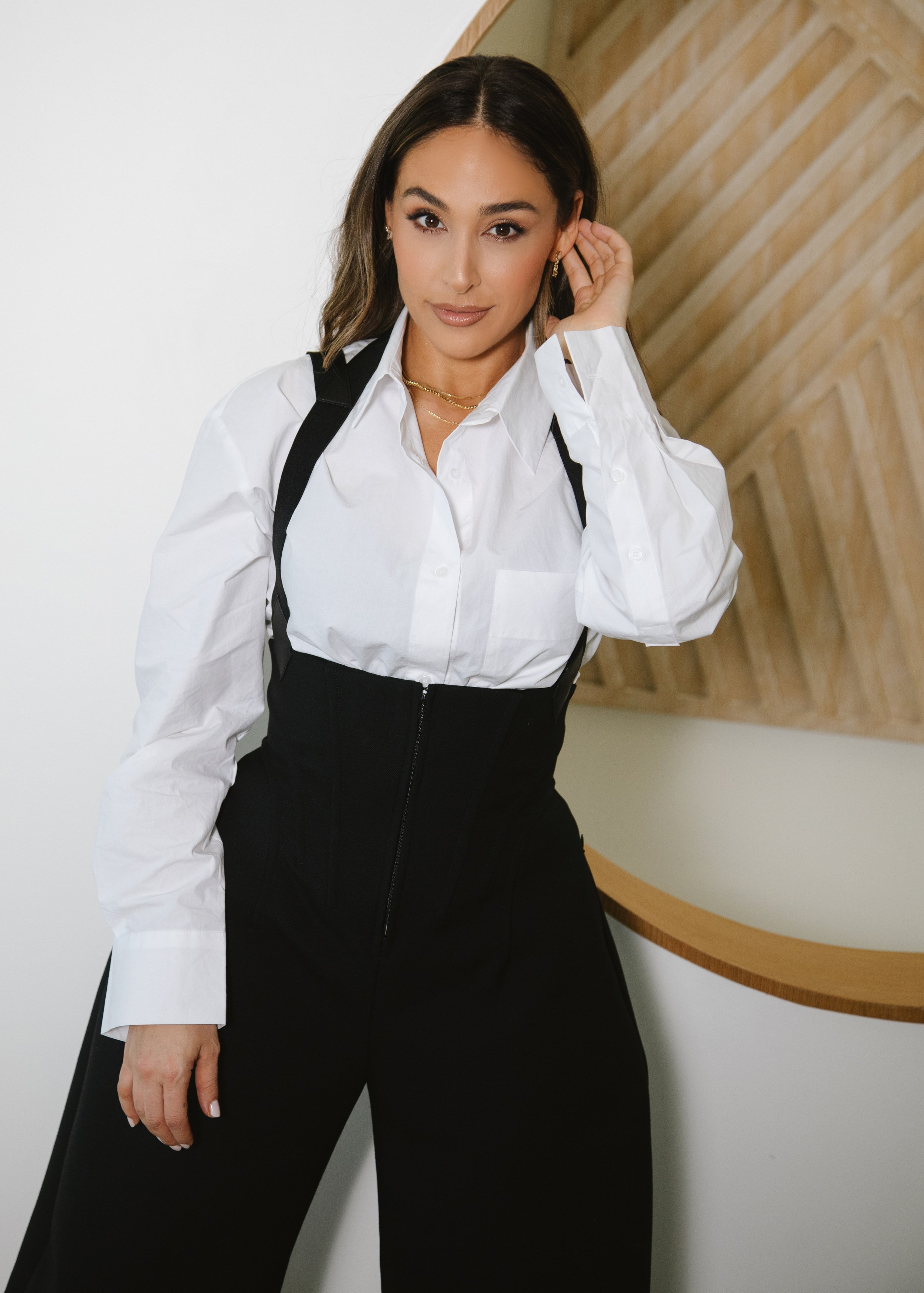
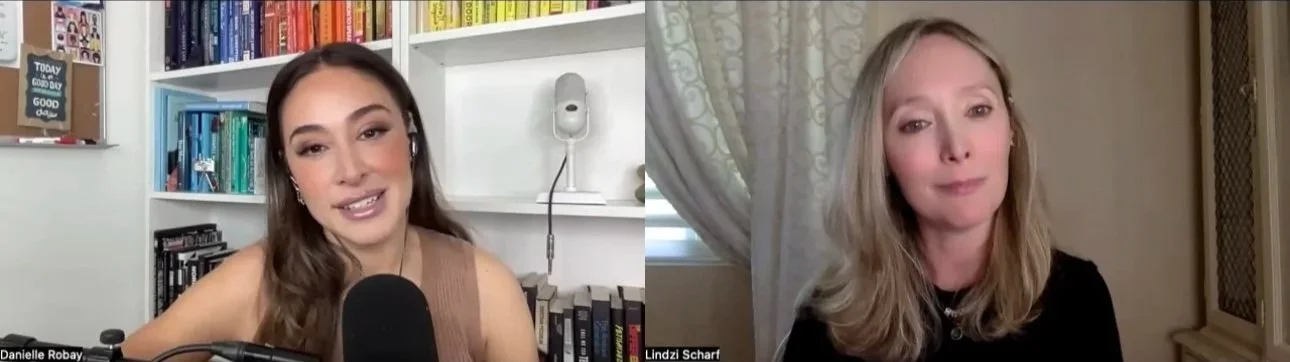
For our latest “FaceTime With,” The Retaility’s founder Lindzi Scharf caught up with media personality Danielle Robay.
They discussed Robay's insightful podcast “Question Everything,” collaborating with Reese Witherspoon's Hello Sunshine on “Bookmarked by Reese’s Book Club,” for which Robay is a host and co-executive producer alongside Witherspoon, and the launch of Robay’s clever conversation card games: “Question Everything” and “Girl's Night In.”
Robay also discussed her childhood in Chicago, her journey from political science communications major to pursuing journalism, what drives her innate confidence, why Robay walked away from hosting WCIU in Chicago's morning show during Time's Up, what the Gloria Steinem Fellow learned from mentor Larry King, what’s on the horizon, and so much more.
Keep scrolling to join their conversation. You can also watch it here.
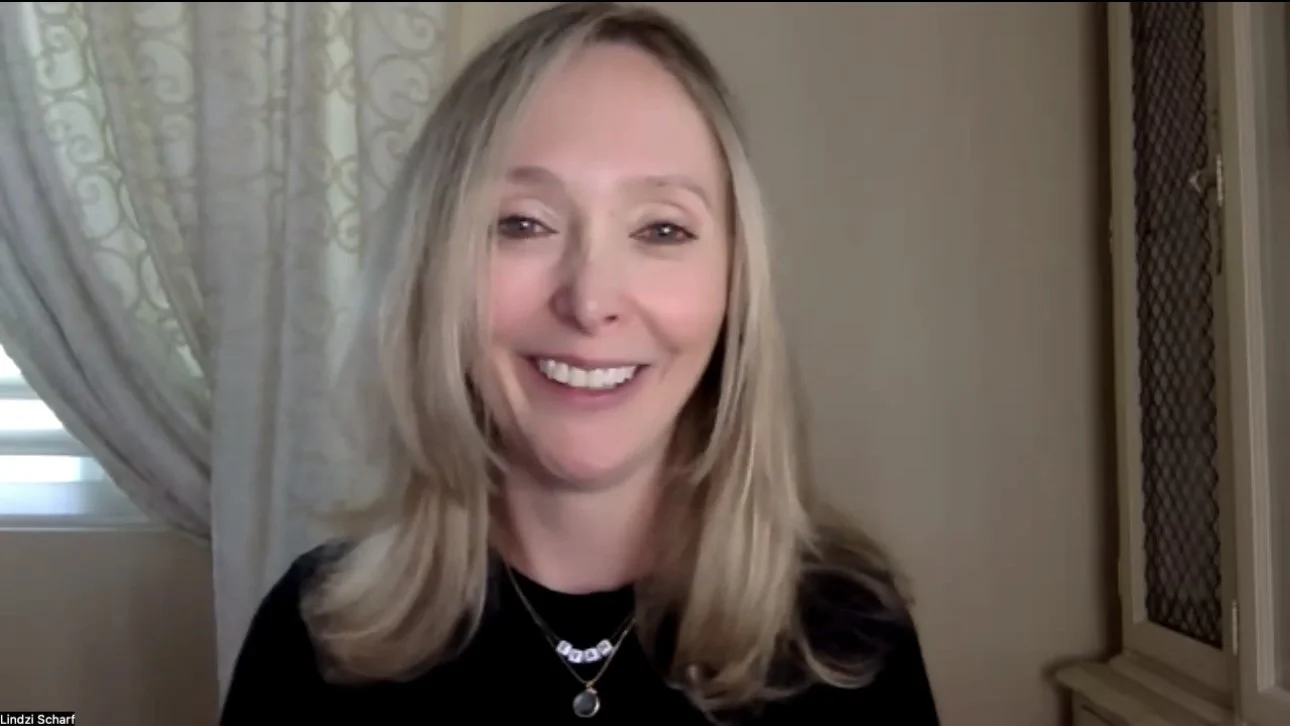
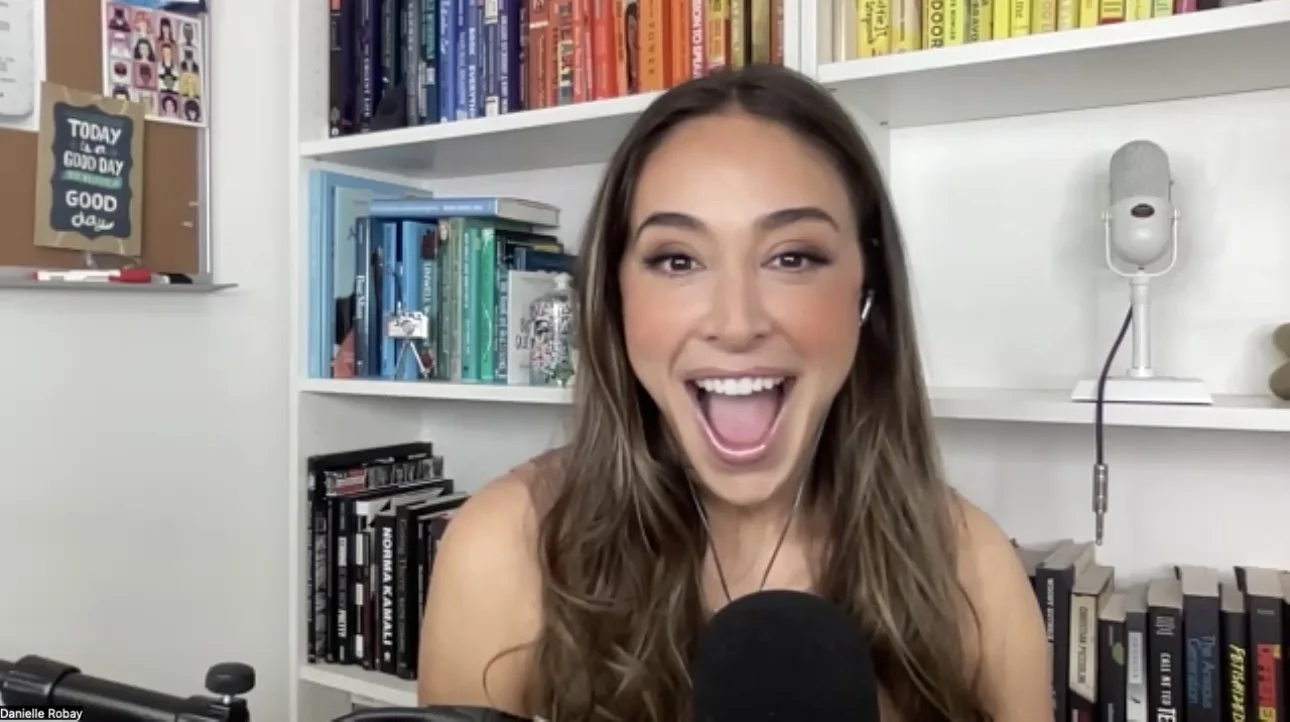
Lindzi Scharf: Hi, there.
Danielle Robay: Hi, Lindzi. I'm so happy to be with you today.
LS: I am so happy to have you here today. It's interesting because when I first launched The Retaility… it's still long-form features, but we were in such a different era. It was COVID, and it was the tail end of that. And so it was going into people's homes and doing it from that perspective. And then, once we started connecting with people again IRL, I started having people do these “In Conversations” together. And now that we're in this whole other era of life being busy—thank goodness—all over again, it's “FaceTime With” because it's so hard—now that we're all on the go again—it's hard to kind of carve out that time. But we've been in the same rooms together, and I didn't put that together until later. Anytime I'm curious about someone—we’re both very curious people—I have to find the time to get to know them. And I figured, what better way than to have The Retaility readers also get to know you.
DR: Oh, thank you. That's so kind. For me, writers are my rock stars, and so I’ve loved your writing from afar for a while. And so I'm so grateful to be in conversation with you.
LS: Well, how sweet of you to say, and I have to also credit you. You know, I had done this Modern Love piece [for the New York Times] about my daughter, Evan. I sent it out to people… people I know well, people I don't know well. And we had both attended Sali [Christeson], Argent, and She Pivots’s dinner, and they'd sent [a list of everyone’s emails to later connect]. I thought, ‘You know what? We didn't get a chance to meet. I'll include her.’ And you are one of the very few people who acknowledged receiving it. And that says something about a person. So I want to credit you. It meant a lot to hear from you. And I was like, ‘We need to feature her.’ So let's get into it. The Retaility is a bit of a deep dive, so I actually want to backtrack. What were you like as a kid growing up? I mean, I'm assuming it started with curiosity, but what did you think you wanted to be doing when you were a kid?
DR: I love talking about this. I have a school photo of myself from when I was six years old that I keep in my wallet and one on my phone, and before I have a big event, I always look at it because I feel that it calms my nerves, because really, I'm only trying to make her proud, and I was the same girl. My mom tells me stories about how I would not go play with people in the park or outside. I would sit on her foot while she was with all her adult friends, her girlfriends, and listen to their stories. And before bedtime, I would say, ‘Tell me a good, bad story.’ I've loved stories my entire life, and I think I was always so curious about how we can maximize the time we have on this earth. And so when I interview people, I get to learn to live better through their stories. And I cannot think of a better job. You must feel so similarly.
LS: 100%. Though I think for me, maybe it started a little differently only in that… Growing up, I was so fixated on Los Angeles. I was from Florida, and from afar, Los Angeles was the mecca, and actors [were] interesting to me. And so I started a website way back in the day. We're talking ’97, not to date myself here, but it was my way of connecting from a distance with the people who were so interesting to me then. And obviously, your interests [evolve] as you get older. … But it's storytelling [that ultimately interested me even if I didn't recognize it in that way at the time]. It's the stories we tell each other, tell ourselves, we overhear. So then in what way did your parents nurture that? Because I think a lot of parents would probably be like, ‘Get out, go see children your own age.’ So yeah, tell me a little bit about how your parents nurtured that [innate] element of your personality.
DR: That's really funny. I've never had anyone ask me that. I think there was a little bit of nurture and a little bit of, ‘Get out of the house and play with kids and be like everybody else, you know?’ I definitely heard those words, but to my parents' credit, they let me dress the way I wanted. I was wearing cowboy boots and skirts and tie-dye shirts and beads. My mom, I'm sure, wanted to dress me more streamlined and beautifully, like all the other kids in class. And she just literally let me be who I was. She never forced me to hug people. She really let me be me, and on the other side of my family, my dad and his parents, they're all educators. And so every Sunday, we would go to my grandparents' house, and it was in this place in Lincolnwood, Illinois, and they had a duplex, and it was small, and it was honestly a little bit dirty and not this gorgeous house that you would think we would all want to gather at, and it was everybody's favorite place. We would sit in their little living room and talk and talk and talk for hours. And I just remember my grandfather asking me a thousand questions. I would be, I think, eight or nine. They called me Dolly, and he'd say, ‘So, Dolly, what do you think of Bush? You think he's a good president?’ And I wanted to impress him. And so I wanted to be in the know, and I think that it really cultivated so much of my political interests, my social interests, my cultural interests. And I love questions, but I really honor him in that way because I think when you ask kids questions, it helps build their confidence. He did that for me.
LS: Well, I was going to ask you because you are so confident in a way that feels so natural. It doesn't feel forced. You just seem so naturally poised and thoughtful. I really noticed that [in particular during one of your interviews]. I’m trying to remember which interview it was, but somebody said something about what the meaning of Namaste was. And you said, ‘I didn't know that.’ And I thought, ‘That's a confident person,’ because most interviewers don't typically necessarily acknowledge, ‘Oh, I didn't know that.’ They want to seem like the smartest person in the room, I suppose. And I thought that's a confident person, because of course, we're not expected to know [everything]; that's why we're learning. And I really thought that'd said something about you.
DR: Oh, my God, Lindzi, thanks for noticing that.
LS: So that foundation, is that where it started for you? Have you always considered yourself a confident person? Where does your confidence come from?
DR: I struggled with a lot of things in my life. It's not like I was always confident in every moment, but I have always felt good about myself. I felt confident about my values and my integrity and my decisions. Here and there, I have shame hangovers of like, ‘I said too much. I shouldn't have said that in the room.’ But overarchingly, for the big stuff, I feel good about how I've treated people, and I think that that helps you move through the world with confidence. I interviewed a child psychologist who sort of changed my perspective on all of this because my dad always said his number one thing was to raise a confident kid. A lot of parents say, ‘I want them to be happy, I want them to be kind.’ My dad said, ‘I want them to be confident.’ And I thought that was interesting. So I asked the child psychologist, and she said, ‘Competence equals confidence.’ So in order to raise a confident kid, they have to do stuff, and they have to fail. They have to figure out how to do laundry and how to ice skate - random things. Just by doing it, you become confident in the world. My parents were doers. They let me do stuff. They let me mess up. I ran for school president and lost. And it was embarrassing. I was lucky because I had the trampoline of their love. So I never felt like I had nowhere to turn, you know? So I always felt it was okay to fail.
LS: That makes perfect sense. And actually, as you're saying that, it reminds me of how Sara Blakely, who does Spanx and Sneex—her dad… I feel like you know everything about everyone, too, because you obviously talk to everyone and you're so well read. [So perhaps you already know this.] But I love that her father used to sit around the dinner table and say, ‘What did you fail at this week?’ Isn't that great? So we started doing a version of that with our son. He's only four.
DR: What do you say? What do you?
LS: We didn't read [that we should do] this anywhere. It's just something that we started doing. [We ask him], ‘What was your high of the week and what was your low of the week?’ And it's always interesting to hear [his answer]. Sometimes they're one and the same because he's four and he's figuring out what anything really means. But yeah, I just think it's fascinating how we [develop in this world]. I'm in this unique space now …. figuring out how to raise that confident kid. So I guess that's also why it struck me because if I'm being honest… I think people who don't know me well maybe would think I'm confident. I don't know. It's hard to view yourself, but I think the way I've always viewed myself is not necessarily [accurate]. I'm more of an introvert who masquerades as an extrovert. Though I kind of wonder… we were similar in that you were hanging to your mom's leg. I used to talk to my friend's parents. To me, they were the most interesting. They would all be outside playing, and I would be sitting there having a conversation with the mom.
DR: I think when you're a reader or a writer, you're sort of a natural observer. And so it sounds like you and I are both observers, and I don't know how you are at a party, but I'm a little bit of an ambivert. I kind of walk into a room, and I observe, I watch people, I look at everything, and then I'll jump in, but I don't jump in right away.
LS: Fair. So left to my own devices, I would just be a fly on the wall. Not for lack of wanting to, but I didn't necessarily have it in me to, on a personal level, approach people. I [used to] always feel like, ‘Oh, who wants to meet me?’ But when I first got my start out here in Los Angeles, as you know, entertainment is the recipe du jour. That’s what you do here. And so my initial job was with InStyle and going up to strangers—celebrities—and interviewing them on the spot. Not a red carpet. [I was on the] inside of events. And so it trained me along the way to find that inner confidence.
DR: Oh, my God. That is so scary.
LS: It was!
DR: Can I ask you what was your icebreaker? Would you notice something about them? Because people are so guarded.
LS: And they should be. They have every reason to be. They didn't know me from a hole in the wall. With time, it got easier because I was seeing so many of the same faces that there was a rapport. I didn't have an icebreaker. I think I knew, 'Whatever I'm getting, I need to get quickly.’ And I had the confidence of being able to say InStyle and knowing that they [likely] understood what that line of question is going to look like. And probably [some of them] wanted [that press]. Not always. Off camera, we'll have a conversation about all that. I mean, there are some horror stories with that too.
DR: I feel like you have an entire book of tea.
LS: [Maybe I’d do that] from a fictional lens. Because I do feel I've observed so much about human behavior. I think how you treat other people tells you a lot about a person. And I think those years really did teach me a lot about human nature, even though, yes, it was through the lens of celebrity. I would just have the confidence knowing the chances [were people] might want to talk. But I gave myself pep talks on the way [to those events]. I [would tell myself out loud], ‘You are as smart as these people.’ …. But I'm going to catch myself here. Because I knew in talking with you… Even though, yes, every good interview is a conversation. I was like, ‘Wait. She’s going to be so good at asking me things.’ And so I'll say to you what my husband said to me [when we first started dating]. He said, ‘The last time we hung out, I didn't get a question in. You asked so many questions. So I'm gonna stop you there.’
DR: That's the best compliment.
LS: I see it that way. I don't know if he meant that. But 20 years later, here we are. … So now I want to jump into the college years. How did you find your way to journalism? [The profession] has obviously taken on a whole different life in the last handful of years. But how did you find your way to journalism? I know you were a political science communications major.
DR: Yes! I love how much research you did. I’m so grateful.
LS: Of course.
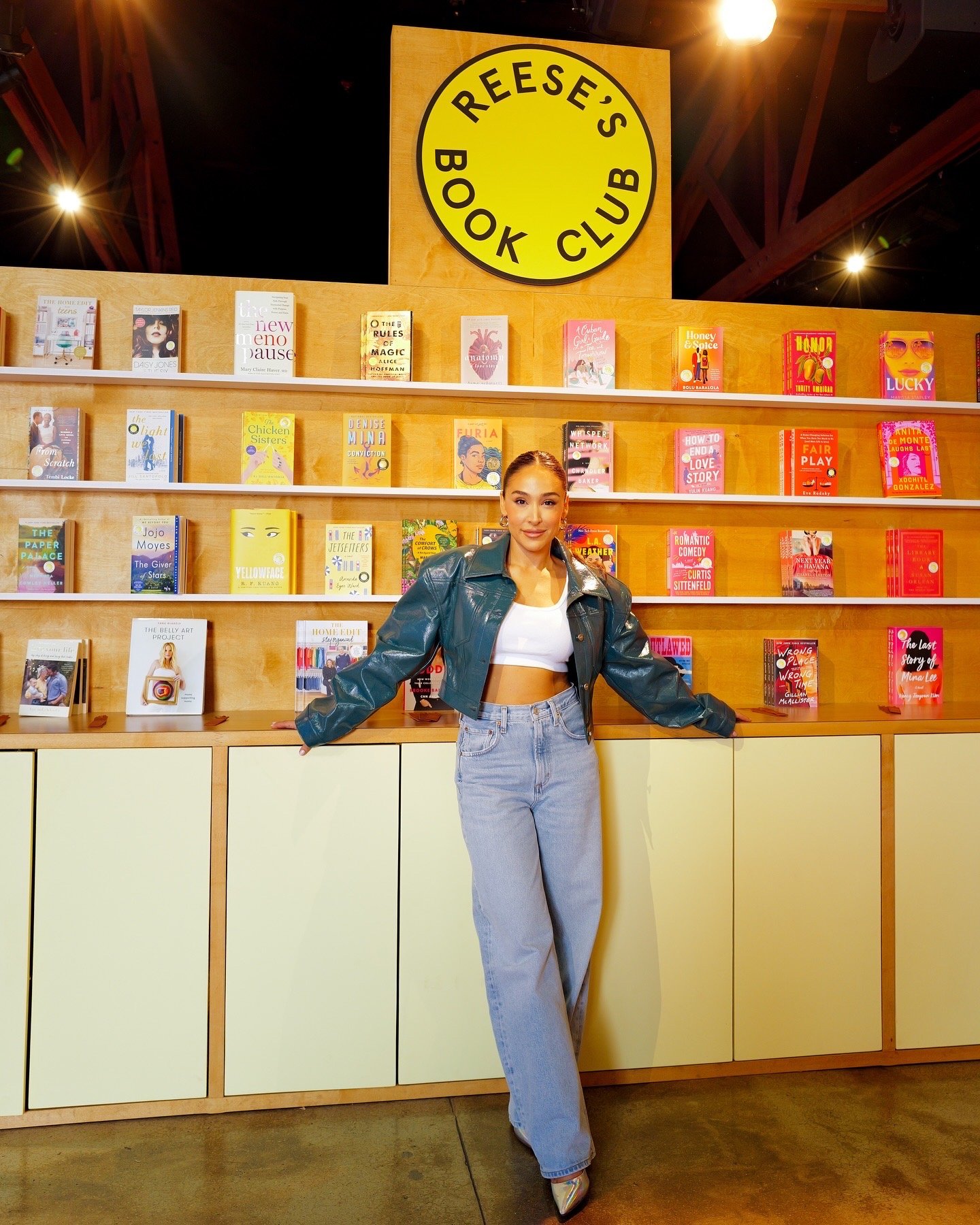
DR: That is very rare. Yes, I was a political science major. I think that's an ode to my grandfather and my father because our dinner conversations were very political. And I sort of live by the Bill Clinton phrase that he said in his first inauguration, that everything that's wrong with America can be fixed by everything that's right with America. And I still feel like we live in the best country in the world. And so I'm never apathetic about it, no matter how hard or difficult or challenging it gets. And I think that sense of patriotism and also curiosity about the world allowed me to really learn how to think, not what to think, in college. And about a year in, you have to pick a major, and I called my mom, and I said, ‘Okay, I'm going to do communications. I want to do on-camera journalism.’ And my mom is super blunt and honest. And she goes, ‘That’s not a real major, no chance. That's a major for people who aren't actually in college. No, pick something else.’ So I said, ‘Fine, I'll be a double major.’ Anyways, credit to her because I was a theater kid growing up, and she was like, ‘You love to perform, and you love the world of politics. I wonder if you would like broadcast journalism. It's sort of a mix of the two.’ And she was right because I applied for an internship in Madison, Wisconsin, where I went to school, and I fell in love. It was off to the races. I was working at the Fox station, and the cameras were 100 pounds, and I think I probably weighed 103 pounds then. And I was carrying them in the freezing cold weather in Madison, Wisconsin, for hours on end after my classes at night. I loved every minute of it, and I said, ‘This is what I want to do with my life. I want to tell stories.’ And it snowballed from there. I ultimately moved to LA because I didn't get a job at a local news station, and I said, ‘I think the Internet is going to be a thing.’ And so much to my parents' chagrin, in 2013, I moved into a garage in L.A., and started trying to follow my dreams.
LS: I love every part of this in so many ways. … The site I had was back in 97. I'm also dating myself by saying this, but I had a site where I interviewed Christina Aguilera and Britney Spears. I understood the power of the internet, but it was a slightly different era when I moved here, and I felt so strongly about paying dues in traditional journalism because people didn't see the value yet. Also, [I was a] rule follower [and the idea then was that] you stay in your lane. Clearly, we're in an extremely different era of all of that, but I love that you had the foresight to recognize that there was a shift coming. So, we know what the traditional path of journalism looks like. But for you, how has that evolved? So you arrive in LA and then what?
DR: I don't think I could have called it foresight at the time. I was just sort of following this feeling, this instinct that I had, and I think that I was maybe a little too entrepreneurial for journalism. I didn't know it at the time, because the network news track is very cookie-cutter. Even to this day, it is, and it's so valuable. I actually really believe in institutions and institutional knowledge. But I don't think that was actually ever going to be for me. And so I got to that garage. My grandmother is a Holocaust survivor and a woman that she met in the Holocaust, which sounds like the plot of a movie, also survived. It was her friend, and she let me live in her garage for free. So I always am like, ‘Barbra Streisand will play my grandmother, and I will play myself in the film.’ I started applying for jobs, and nobody would answer me. And so I would send little notes with bamboo plants or cookies [to] try and get them to respond. I had a much higher hit rate when I sent a gift. And it sort of snowballed from there. One day, six months later, after lots of emails back and forth, checking in, saying, 'Hey, I'm really eager.’ One of the outlets called me and said, ‘Our host is sick, can you be at the Paley Center in Beverly Hills in three hours?’ And I said, ‘Absolutely.’ And that was it. Once I started doing red carpets, I started building a reel, and I started networking. I mean, you must know from your time, too, with InStyle, once you're in the room, you start seeing the same faces and meeting people, and it's much easier to network. To get into the room is so difficult.
LS: But that's where I think you and I differ. Yes, getting in the room is hard, but I played the role I was sent there to play. I think there really is something to what you're saying… Once you're in the room, you're still you, no matter how you wound up in that room; no one really knows. I think to me, [I was afraid of] stepping out of line. If heaven forbid, I was myself for a minute. But take it from there.
DR: I don't know because I think you know, InStyle is such a big brand name. I was working for these small internet outlets that, if I'm being quite candid, I don't know that I had so much respect for them at the time. And so I kind of knew they were using me, and I was using them.
LS: I see.
DR: Once I started working in more legacy media, I ended up at Entertainment Tonight Online and E! and other places, I did feel that sense of loyalty and respect. You are representing a company. So I get what you're saying.
LS: But I appreciate you sharing that too, because that makes sense too. I think sometimes the best advice is hearing other people's trials [and tribulations]. It's observation, you know? And so I think that's an interesting observation too, for anyone [reading] that. It's important to also respect who you're there for. But I guess when you were in the room, you understood; you were in that room for many reasons. Not simply just [for] the outlet at hand. So that makes sense.
DR: I don't think that The Red Carpet Report, [which] was started by some random person, was ever going to help me live my dreams. It was my in.
LS: That makes total sense. Okay, and then you went to Chicago, and you were on a morning show, and I love the story there because I think there's also a real lesson to be said for why you took the job as the youngest morning show host, but then left. So would you mind speaking to that as well?
DR: Oh, my God, I didn't want to take the job, Lindzi, because I was dating this guy and he was my first big love and I finally had a foothold in Los Angeles, and it was so hard to make friends and network at work, and I finally felt like I belonged here a little bit. And then I left Entertainment Tonight Online, and I was unemployed, and I met Larry King through a friend at Nate 'n Al's in Beverly Hills. And that one connection changed my life because Larry taught me how to ask questions. He made sure I knew how to tell a story. Just from sitting across from him at breakfast over and over again, I saw that my curiosity could take me anywhere I wanted to go. Because his had taken him into incredible rooms and across the ocean and into these big adventures that I had always craved. And so that idea that you can't be what you can't see was sort of codified during my time with Larry. And then I got this job opportunity in Chicago, and I'm so grateful her name is Michelle Weiner. She's the motion lit department head at CAA, and she was a friend of mine in L.A., and I called her about this job, and she was like, ‘Danielle, if this man is the right man, he will be the right man in two years; you better take this job.’ So I packed up my bag, and I moved back to Chicago, and in hindsight, it was so meant to be because my grandfather, who I mentioned earlier in our conversation… My grandfather ended up passing away at the end of my time there, and I thought, ‘Oh, my God, I was meant to spend this time here.’ Wow. And I got a lot of family dinners with my brother and my parents, and it was beautiful. But I had two co-hosts, and I found out that my male co-host was making $60,000 more than me, and I couldn't even pay my rent. My parents were supplementing my rent each month. And I was so angry. It was in the middle of Time’s Up and Me Too, and I was so emboldened by all the other women who were fighting for their worth. And the station I was working at didn't see my value. And so they offered me basically a 5% raise, and I was making 100 grand. So I'm not great at math, but I think that was $2,500 [more], which was not going to help me pay my rent. So I quit. I bet on myself, [and] I quit. But before I left, I went into the dressing room of my third co-host—Felicia [Lawrence] and I are still great friends to this day—and I said, ‘I have some information to share. It's not easy to hear. It's totally up to you what you do with it, but I think you should know. And I shared what I was making. I shared what my other co-host was making.’ I moved back to LA, and I moved in with this guy who I was still dating long distance. Four months later, [I] moved out. That is a whole other conversation in itself. That was a traumatic event for a lot of different reasons. But it was also what put me on my path, Lindzi, which is so weird. But it was my ‘dark night of the soul’ [moment], and it ultimately threw me into therapy. I have tons of books behind me. I started reading again. I'd always been a reader as a kid, and I read women's stories because therapy wasn't helping. I signed up for a triathlon; that wasn't helping. I was so sad. I was acutely depressed. And the only thing that I found reprieving was reading other women's pain, because I thought, ‘Okay, I'm not the first person to go through this.’
LS: Oh, my God, sorry. That hit me. Wow. That's really powerful. Wow. Okay, so that obviously, on a personal level, fed your soul, but then how did [that lead to where you are now], because you're surrounded by books now professionally too. And obviously you have ‘Question Everything,’ that podcast, which originally was ‘Pretty Smart’ and [then you] rebranded it.
DR: Oh my God, you are incredible. You're amazing at what you do.
LS: You're very kind. Well, I can't talk to someone who's always prepared and not be prepared.
DR: Do you know how many interviews I do, and I don't mind, because it can be a conversation [but] I do so many interviews where people don't know anything about me. I'm really grateful.
LS: Oh, my gosh. Well, I'm blown away to hear that because if you're known [for always being] so prepared, how could anyone not be prepared? I’ll tag in quickly and simply say, what was always interesting to me is… Sometimes I was sitting down with people… I won't say the outlet, and I won't say who.
DR: Name names!
LS: It was a basketball player who wasn't yet playing [for] the Lakers. And I guess there had been some buzz that he was [coming to the team]. I don't cover sports. I have never covered sports. … I was only there because he, like everyone else in this world, had a fashion collaboration [coming out]. And so that's what the topic was. If they were so concerned about what I might ask, which is against policy to ever share, as you know, questions or anything in advance… But if you're so concerned, do research on me, look and see what kind of journalist I am. Honestly, I think the gentleman behind him, which again is another conversation for another day. It was during the Trump era. It was right after the Hillary Clinton and Trump debate, where he loomed over her [and] this man did the same thing to me as I'm on the phone with my editor, because I wanted to cut [doing the interview] right then. …. But the point being, if you're so concerned, research me. So it's amazing to me that people, they're sitting down, they're interviewing you. Why would they not research you? But in any case, [you started] Question Everything. And then how did you find your way to doing Bookmarked?
DR: So I think almost every great thing in my life has come from pain and frustration. And I say that professionally. I think I was always trying to fit a square into a round hole in my 20s and even the first few years of my 30s. Every job I had, I learned so much, and to this day, I use so many skills that I learned at each place. So I don't regret any of the time, but I was just so frustrated all the time because it was never the right fit, and so I was still auditioning for things. I had gone in to E! a million times in every different department, and they, I think, wanted to hire me. But it never was quite right. The marketing department said no, [or] the sales department said no. E! News said no. The original programming department said no. But they kept calling me in for these meetings. And one day, I saw a deadline that Tammy Filler was hired to run E!, and she was moving from New York. She was at The Today Show. And I thought, ‘Maybe this is my time, because if somebody's coming from The Today Show, they're a little more cerebral. Maybe Tammy will see who I am.’ I had one mutual friend, and I called, and I said, ‘Could you put in a good word? Could you send an email?’ She said yes. So I ended up meeting with Tammy, and nothing happened, and then months later, I got an audition. They were moving E! News to New York. I auditioned, and then I got a callback, and then I did another callback, and it ultimately was up to me and a few other people. So they flew me to New York, and these things are just so unnecessarily chaotic. They know this is happening, but they call you at the last minute, and they are like, ‘Can you get on a flight in three hours?’ And then you just have to find an outfit, and you don't have sleep, and then you do the audition at 30 Rock. And ultimately, I didn't get it. And I fell onto my hotel bed in New York, and I'd never cried over a no before, but this no hit me so deeply because I felt like it was the end of the road. I [felt] like, ‘If this wasn't it, it was never going to be it for me.’ And I was always… I can tell you're similar. I always did the right thing. And I went the extra mile, and I was like, ‘What more? What do I do now?’ This was my dream. I had no other dream. I felt called. And it was a big NO. And I was dating a different guy at this time who lived in New York, and we were only three weeks into having met. And he walked into the hotel room, and I was just crying, and it was kind of too early to be a mess in front of him. He sat on the bed with me, and he said, ‘You can be upset for a day or two, and then you need to go hire yourself.’ And I was like, ‘You don't really get it. In what I do, you have to be hired. The Today Show, Good Morning America at the highest level—they are hiring people.’ He goes, ‘All those people, Danielle, just have jobs. If they were fired tomorrow, they are in the same position that you are. And I'm not saying they're not talented, but they just have jobs.’ And he also said to me, ‘It seems to me that people don't see you the way you see yourself, so you better go make them see you that way.’ And I was so angry with him, but he was right. And so, fast forward, COVID hit about a month and a half later, and I decided it was time to launch my podcast, and it was at the right time for podcasting, right in the sweet spot. I launched a podcast called Pretty Smart. And the idea was putting a new spin on Pretty. Pretty Bold, Pretty Strong, Pretty Witty, Pretty Smart. Because I had interviewed all these celebrities, and everybody always cared about how pretty they were, their looks, what they were wearing. [I always felt like] these women have a lot to them. So I wonder if I could get a celebrity interview and talk about something else. And ultimately, that turned into Question Everything. The craziest part about all of this is that woman Tammy Filler from E!, years later, called me one day and said, ‘Danielle, we have a show for you. Do you want to come do it?’ And I was like, ‘An audition? I’m done auditioning.’ And she was like, ‘No, no, no, I want you to do the show. I know you can do live TV.' I said, ‘Tammy, why are you hiring me?’ She said, ‘Oh, that's easy. I love your podcast.’ It was the greatest validation that that guy was right. Ultimately, betting on yourself is always the right move, because I poured all of my savings into that podcast. Because I wanted it to be video, and I was so scared. There were so many moments where I was like, ‘What the hell am I doing?’ I have screenshots of my bank account being at $333, and I didn't know how I was going to pay my rent or the people that were freelancing for me to make this podcast possible. And ultimately, I ended up being able to build something and build sort of a niche and a presence. But there was something missing. And as I shared before, I had been a reader my whole life. And I saw what Reese Witherspoon was doing with Reese's Book Club. I would follow each month, and I thought, ‘Wow, this community is so engaged.’ Every time she would release the book pick, thousands of people were commenting, and they were so excited, and I was like, ‘What's happening in between each book launch? There's a whole month, and there's no content.’ I think there needs to be a show here, and they need to own BookTok and own YouTube. So I spent $500 putting a pitch deck together that looked like a Hello Sunshine deck. I tried to make it look perfectly tailored to them, and it was $500 I didn't have, and I DMed the CEO of Hello Sunshine, and I said, ‘What's your email?’ She didn't reply. Two weeks later, I'd been sitting on it, ruminating, ‘What's my next step?’ Because when I know something is right, I will not give up. Like I'm a dog with a bone. No means next option to me. So, I knew this was right, and I just sent her the link to the deck. Two minutes later, she said, ‘This is interesting. Email me.’ And so ultimately, now I'm doing the Reese's Book Club podcast, but I guess the biggest lesson from my rambling that I can share is that if you want something, you must go get it. I think so many people read stories about how people have found success, and people like to rewrite history. Most of those stories are somewhat concocted. Most people do not get something handed to them. Most actors don't just get a job handed to them. Most models aren't discovered on Lincoln Road. People hide the trying, but I don't because I think trying is winning.
LS: I do not understand [why they had the details]. What a disservice. What is the point of doing any of these? If we're just spouting soundbites and not talking about the in between? Because the in between is where it all happens. I mean, it's the reality. One of my favorite takeaways from doing my site… And I don't know how much time you have [today]. I feel like I could talk to you forever. I'm realizing, are you okay on time?
[DR nods.]
LS: Okay. I was going to say one of my favorite takeaways [from The Retaility]. There’s this designer, Janessa Leone. She's a hatmaker. …. During The Retaility feature with her, [she shared that] she was on the Forbes 30 under 30 list while still nannying. So she was on 30 under 30 for her company, but she was still nannying because she was taking that incredible salary that many nannies here in Los Angeles [make], and she was putting it into the aspects of her business [where] maybe she felt like she didn't thrive, whatever the reasoning was. And I thought, ‘How savvy is that?’ Why don't we talk about moments like that more often? So I love that you broke that down. That's so interesting. I have that much more respect for [you]. You're great at what you do. But the fact that you packaged that and said, ‘This is what's missing?’ I mean, that's brilliant.
DR: Thank you so much. One of the people I interviewed said to me, ‘Follow your envy.’ And I had this guttural reaction because I [felt], ‘I’m not an envious person. I want the best for everybody.’ And she was like, ‘No, no, no, that's jealousy. Follow your envy. When you look on your phone on Instagram, what do you get those pings of? When you see an author become a New York Times bestseller, do you get a ping? Like, I could do that? I want that?’ And I got those pings looking at women's conferences and rooms of women, and I was like, ‘Oh, I want to be in women's media.’ And so that helped catapult my next era, because I was following my envy.
LS: I love it. Well, I don't want to keep you too much longer, even though there's so much more I can talk to you about. Also… [LS holds up the card deck DR designed.] So you Question Everything. And then I would imagine this is second edition, right? Girls Night In.
DR: Yes, I sent you the new one because I think it's really fun. It's so cute. I love it.
LS: I know it's Girls Night In, but I'm doing a family trip soon with my in-laws. I'm bringing this.
DR: You better take a few of the questions out. There are some questions that you do not want to know about your in-laws. But most of them are okay.
LS: That’s hilarious. … But I also wanted to turn it around and have you answer a few.
DR: Oh, I love that. It's so fun.
LS: But before we do that, when and where did the idea to do this come about? When did you create all of this?
DR: Yeah, two reasons. The first is Larry King was a mentor of mine. And when he passed away, I called him the King. Everybody did. He was Larry King, the King. And so I would always say, ‘The King of Questions.’ And people started calling me ‘The Queen of Questions,’ sort of tongue in cheek. He was so insatiably curious. [I thought], ‘I wonder if I could put some of my favorite questions together,’ in his honor, because I think that everybody wants to have better conversation. You probably know this feeling from interviews, but sometimes you can be having this nice, regular conversation, and it's a good conversation, but then either you ask a question or somebody will share something and the temperature of the room changes. All of a sudden, it's almost like your heart's open or there's a connection, and it just shifts the feeling. And I love that feeling. I crave it in an interview. And so I put those questions together so that everybody could have that feeling at a dinner party or with their girls on the couch. Because so much of our life is just trying to catch up, and that's fine too. But I think it's so fun to get with your girlfriends who you've known for 15 years and learn something new about them. So that's really the impetus of the question cards, and they freaking work, which is so fun. It's so cool to watch it. Something you made out of your brain and then see it in people's hands. It's so exciting.
LS: I will say, doing InStyle back in the day… It's funny, the fashion world thought I covered entertainment. The entertainment world thought I covered fashion. To me, it was always about people. It was the person behind it all. It always started with the person. But what was interesting was they would send round-up [questions], like ‘What was the first pair of designer heels you ever owned?’ But I still remember Victoria Beckham going into [a whole monologue about it]. In some ways, [that was] her origin story and her mother’s. You wind up learning [so much] with these little prompts. [I learned] a lot about a person, more than you would expect [based on what might appear to be surface-level style-related questions depending on how deep people did and didn't want to go]. Okay, wait. So this is the one I randomly pulled when I was first going through this [deck]. So I want to pose it to you. What's a class, book, movie, or piece of art that completely changed your perspective on life?’
DR: So, there's a lot for me because I feel that artists focus our attention. I feel like we don't hold artists sensitively enough in our culture because so many of them are the most sensitive people and they put their whole hearts into the world, whether it's through paint or music or writing. And we just rip it apart, right, as cultural critics or as consumers, and I think we're so lucky to have them. And so I hold them in such high esteem. I think Gilmore Girls was a big show for me because Rory was the first girl I saw who was super smart and so cool. She made it cool to be smart. And I loved First Wives Club. My mom told me to never tell any man that that's my favorite movie on a first date.
LS: That's one of my favorite movies. Yes, I made my sister's bachelorette [party watch it] because they were younger than me. I [felt] like, ‘How have you not seen this movie?’
DR: It is so good. Like Bette Midler, Diane Keaton, and Goldie Hawn, what could be bad? It’s perfection.
LS: Well, I could pull more of these, but I don't want to take up too much more time. Last question would simply be—what from here? Even though I do believe in living in the now very much so. But, you know, but looking ahead, what's around the corner?
DR: I don't know how to live in the now. I'm a Capricorn, Midwestern, and a firstborn daughter. So, I only live in the future.
LS: I used to. I get that.
DR: What now? Okay, I'm really trying to pour into my personal life a little bit. I've never done it. I've always been so work focused. I'm 35. And I really want kids. So I'm trying to date a little bit. I also sort of believe the universe conspires for us, so I'm not putting too much pressure on it, but I am trying to be open-hearted. I am actually so scared, Lindzi. I've not been this scared since I launched my podcast, but I’m turning the card game into a proper business, and so I made my first business plan. My first hire for e-commerce, and that is going to be a fully fleshed-out business by the next time we talk.
LS: Wow. And congrats.
DR: I’m growing Question Everything, and Bookmarked by Reese's Book Club is growing, and so I'm trying to stay on my path. I had my first hypotherapy session. It's not as woo- woo as everyone thinks. It's basically deep meditation.
LS: And see, even deep meditation, other people are like, ‘No, yeah, you're woo-woo.’ No, no, no. Go on.
DR: I still have my Chicago sensibility, so I haven't fully transferred over to California Woo Woo, but I'm in the middle somewhere. But I did my first session, and I got to meet my young Danielle, like six-year-old Danielle. And she told me I was missing the point. That I was so focused on success and wanting things to grow and wanting things to make money that I was missing the point. And it was so true. And so… [She pauses.] Oh, I see you're having a reaction.
LS: I am. See, once upon a time, [becoming emotional during an interview] never would have happened [because I would have viewed it as unprofessional]. But I'm just not in that place in my life anymore. This resonates so deeply because I've been you as well. And I know you. I love you. I think you're amazing. I really mean that from the bottom of my heart. But what you're saying resonates. And that's a conversation for you and [me] on another day. But what you're saying really resonates because life forced certain circumstances where it's everything I needed on a personal level and thus professionally, I believe too. But I think it's hard to see that from the outside. But go on because this is very much resonating. I'm taking the emotion out of it. What were you going to say?
DR: Well, thank you for that because you gave me that feeling that we were both talking about in the interview. So yeah, chills, thank you. I realized that my gift in life is connection. And so you mentioned at the beginning when you said I was one of the only people who responded to your email. One, I felt called because I respect you and your work so much. But also, I try to go out of my way for people, and I think when you're open to the world, that's when the magic happens. And I don't know what all of my shows or my work will turn into, but I know that that is the thing. So that's now the thing I'm after and the thing that I'm trying to share with people. I do need to pay my rent on the way there, but that's that's the thing.
LS: Beautiful. On that note, we'll call it there. This was so beautiful. Thank you so much for doing this.
DR: I’m so grateful to be here with you and for your time. You're going to have to let me ask you a million questions because now I need all your stories.
LS: Oh, my goodness. That's for another day. But yeah, one of these days, if you're based in Los Angeles.
DR: Yeah.
LS: One of these days, we'll meet up and —without recording involved—we will chat.
DR: I would love that because I'd love to hear more about your path and a few things you were alluding to.
LS: Absolutely.