

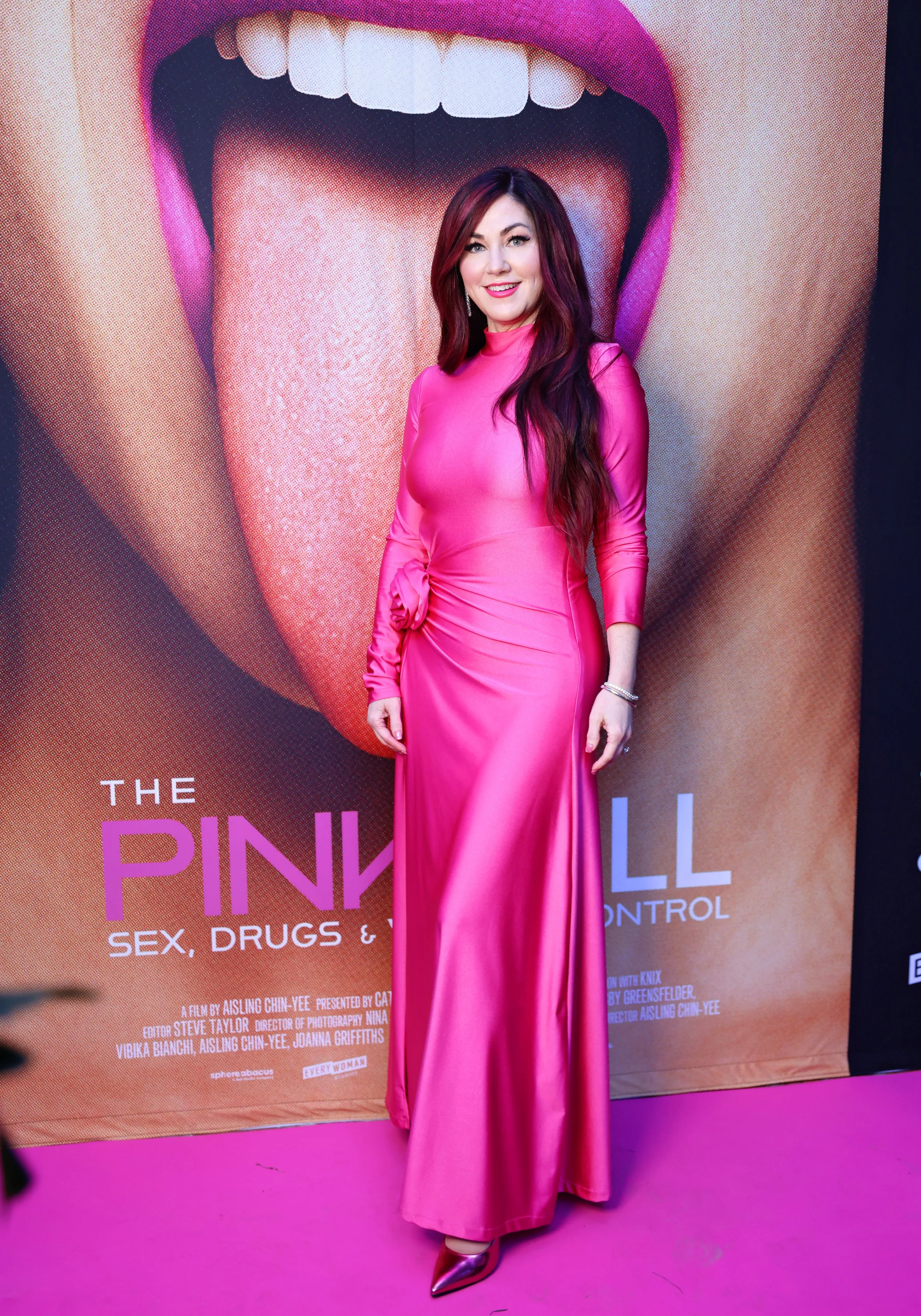
Photo by Sara Jaye Weiss/Getty Images for The Pink Pill
For our latest “FaceTime With,” The Retaility’s founder Lindzi Scharf caught up with entrepreneur and women’s health advocate Cindy Eckert, whose work is the focus of director Aisling Chin-Yee’s documentary “The Pink Pill: Sex, Drugs, & Who Has Control” on Paramount Plus+.
Scharf and the Sprout Pharmaceutical founder — whose celebrity fans include Whitney Cummings, Monica Lewinsky, and Awkwafina — discussed Eckert’s journey bringing to market the first and only FDA-approved low libido drug for women (Addyi), why she reacquired her company in 2017 after selling it for 1 billion dollars two years earlier, her path to women’s health and entrepreneurship, and what excites her as an investor through her The Pink Ceiling investment firm.
The North Carolina-based entrepreneur also talked about growing up overseas as the daughter of politician Fred Eckert, a U.S. Ambassador to Fiji, Tonga, Kiribati, and Tuvalu, and how her childhood influenced her love of entrepreneurship. Additionally, Eckert shared how she’s navigating grief and what she’s recently learned about herself after the unexpected passing of her mother, Karen Eckert.
Keep scrolling to join their conversation. You can also watch it here.
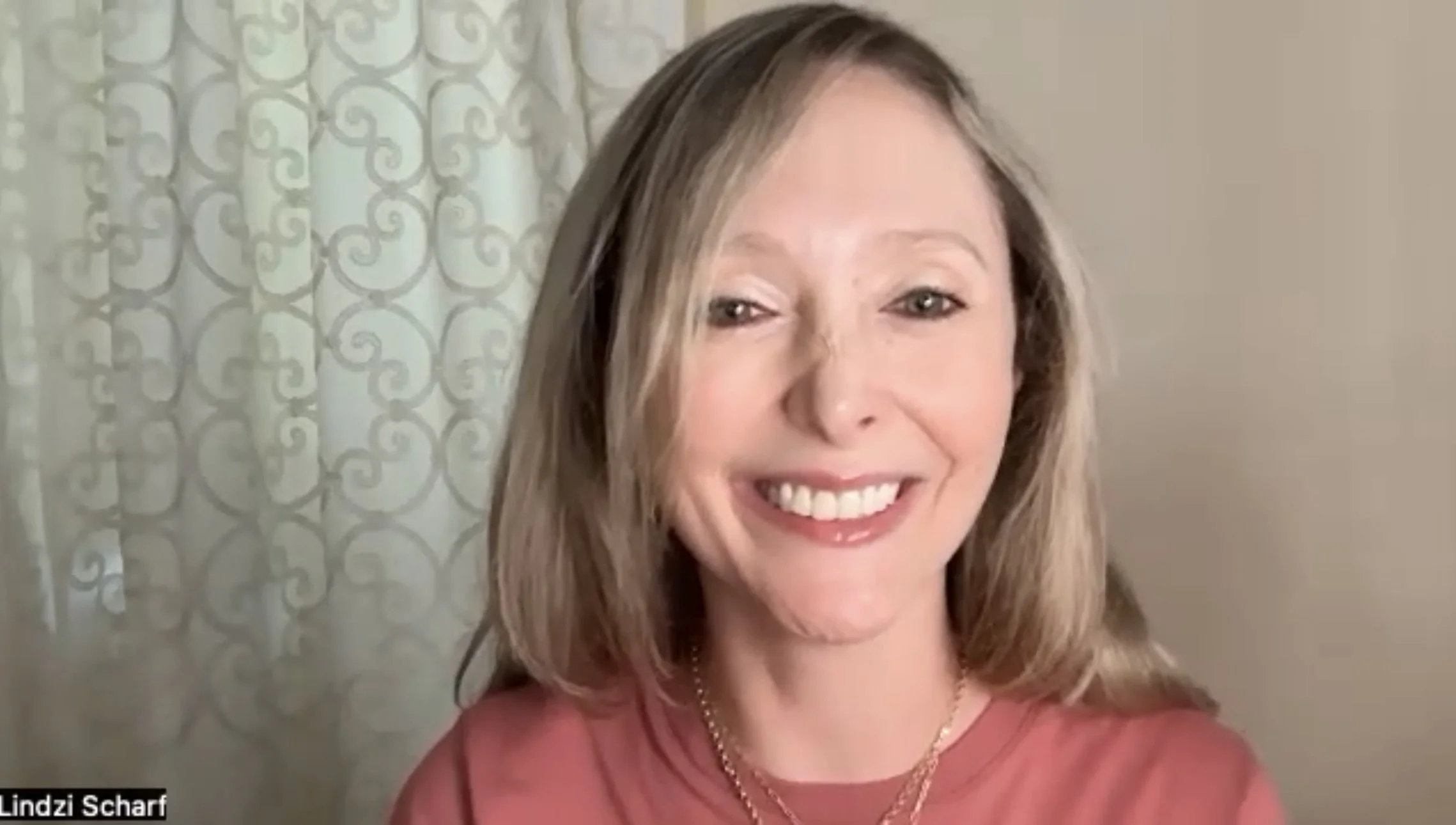
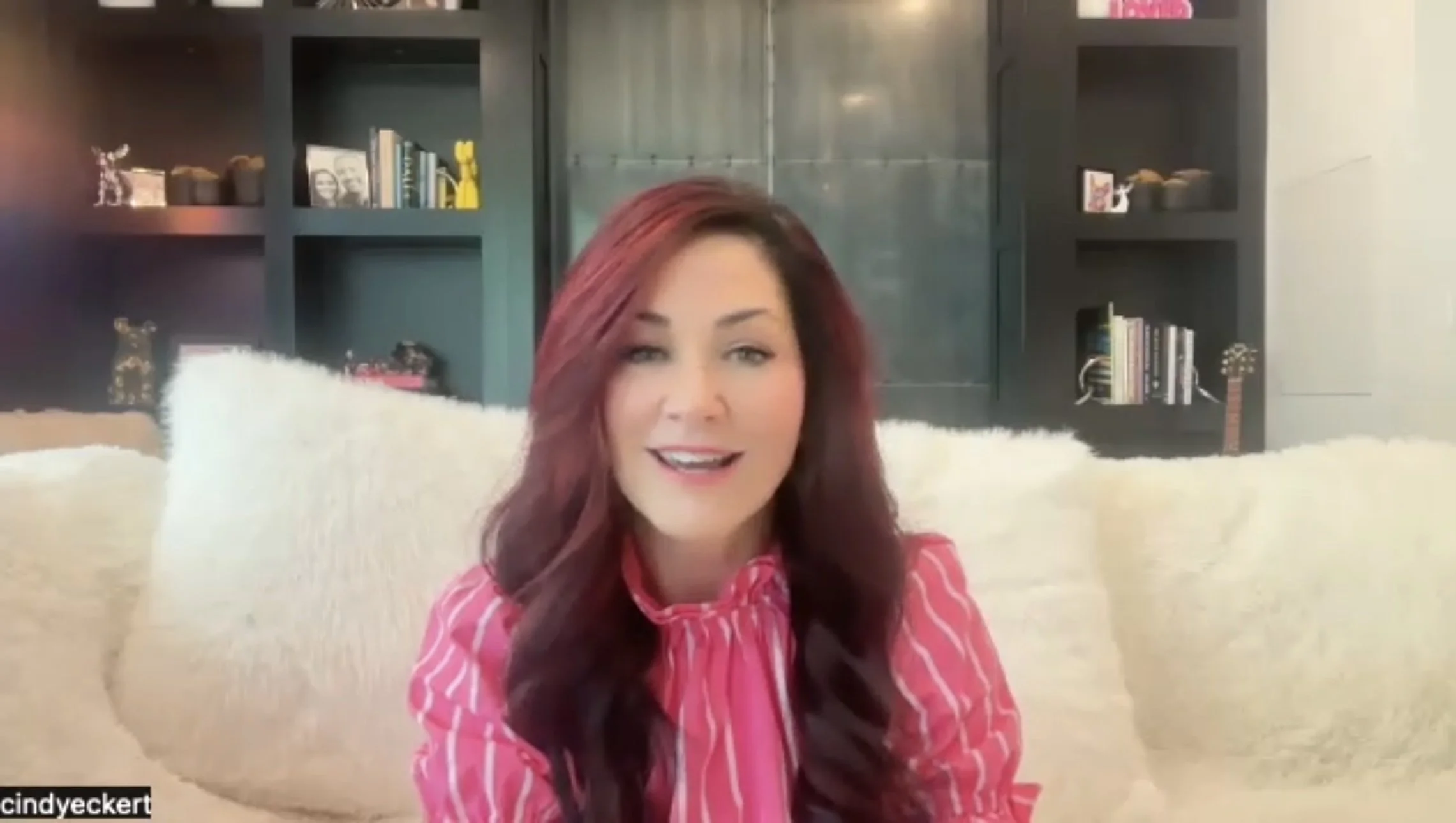
LINDZI SCHARF: Hi, Cindy. Good to see you.
CINDY ECKERT: It's so good to see you.
LS: I've been wanting to finally sit down and have a proper conversation with you after we first met at San Vicente Bungalows, where you screened your documentary, “The Pink Pill.” It's such a fascinating story, so I'm so happy we're doing this today.
CE: Thank you. I've been looking forward to it.
LS: Same. Obviously, it took a lot to lead to that moment. So, let's backtrack. Tell me a little bit about your professional journey, what led to the discovery of “The Pink Pill” (Addyi), and the journey you went on from there. What was your professional background?
CE: I'll speed through the beginning. I literally was a business student who fell in love with what made companies great. I went to work for [one of the companies listed as] Fortune's Most Admired, which happened to be a medical company. I fell in love with science and then stuck with it until I found an area that became almost a calling. So, [I’m an] entrepreneur by spirit, always wanted to build my own thing, started in big pharma, [and] left it far in the rearview mirror because it wasn't for me. [I] wanted to be in innovative companies that were helping [and were] really in touch with patients and helping them. And I started at a male sexual health company. So, you can imagine me in pink leading a male sexual health company, a little bit of an outlier, but I loved what I did because I realized that people had shame or stigma associated with something that is so fundamental to our human experience and our joy. To be able to restore that was so meaningful. That said, here I am running this male sexual health company. One day, at a conference, they present science that is showing us what it is that can unlock desire for women, and lightning struck me. I was like, ‘Hold on, there are 26 different FDA-approved, scientifically validated treatments for men to have more satisfying sex lives, but nothing for women, even though more women struggle with it, and we have this science, but nobody's pursuing it.’ The bulk of my career has been spent in the women's health space and specifically around the first-ever FDA-approved product for women's desire.
LS: Wow. So, I've seen the documentary. It's available on Paramount+ for anyone who hasn't seen it yet. How did the documentary come about? I mean, I obviously know [all about your] journey having seen the film, but how did the documentary piece of it come about? Because storytelling is important. It's how we get the information out there. I'm curious because I'm sure it wasn't even an easy sell to do a documentary. I know [what] that space looks like.
CE: Lindzi, I didn't want one. And I have learned my lesson in spades from magnificent storytellers and investigative journalists who found their way to my story from their own health journey. So, [it’s] all women producers, an award-winning female director, Aisling Chin-Yee, who is remarkable. They cold-called me and said, ‘I cannot believe this story. We're investigative journalists. We're going to do a documentary about it. We'd love for you to sit for an interview.’ And I was like, ‘No, thank you.’ I think about that not from the standpoint of, 'I hope that doesn't come across as arrogance.’ It was really because you've seen the story… [There were] so many years of misinformation and brutalizing the truth of women's health that I didn't want to relive it. Because we've made so much progress. But I'm eternally grateful to them [because] they were going to tell the story with or without me.
LS: I didn't realize that piece of it. Not to interrupt, but I did not realize they were telling this story with or [without you.]
CE: [They] convinced me to sit for an interview. What I sat down across from was women who shared a heart of advocacy and of getting these stories out to women, so that they can [make] better informed decisions for themselves. So, in the end, it is nothing but a love fest, but it was a funny start. I got a cold [call], and I said, ‘No, thank you.’ But, you know, the end result of it is that it won the Audience Award when it premiered at DOC NYC Film Festival. It's been an out-of-body experience for me to get to sit in theaters with strangers or have people DM me [after] having pulled it up on Paramount Plus.
LS: How did they convince you to sit down for it?
CE: What was so interesting is that in the two years that I held them at bay, they went to work and they did research and they came at it from something that I hadn't been met with – as you saw in the film – which was neutrality. They just wanted the truth. Just the facts, scientific evidence, and that was not clickbait controversy [about] the female Viagra and all that nonsense that I'd had to wade through. That really won my heart. And I'll tell you, the first time they showed it to me… they had such a remarkable person who did archival footage that I sat down [and] hadn't seen that footage in 10 years. I was overcome with emotion, watching it and being right back in that room and reliving it. They did such a lovely job [with the] doctors they included, patients they included. The fact that it was such a comprehensive 360 made such a difference to me.
LS: Looking at the story from a feminist perspective and from a female point of view, it's such a no-brainer what was going on behind closed doors with the decision-making of bringing this drug to market through the FDA [and] the approval process. It was so very clear once you're presented with the facts. It was a fascinating story. I mean, I see your story being fictionalized. I see you being like The Fixer [that] Kerry Washington [played].
CE: I’ll take it all day. Let Kerry play me.
LS: Oh, Scandal. That's what I meant. I can see it [being like] Scandal. It’s a story that has legs. So, I'd love to see that.
CE: One of my favorite headlines about the documentary was ‘When Erin Brockovich meets Legally Blonde.’ For my love of pink, I thought, ‘Yeah, that computes for me.’
LS: I can see that, and I look forward to that. So, your love of pink … where did your love of pink [originally] come from? Because I love the image of you standing in these rooms with nothing but men, and you're wearing pink, which is a bold choice.
CE: It was really pink in a sea of blue pills is what I would like to say. The blue and gray suits, the blue pills, and such a male-dominated space and a male-dominated conversation that trivialized when women were struggling with these issues. In the same way, we're having a revolution talking about menopause and all the things that we've [previously] trivialized that affect women's quality of life. So, to me, I think that pink is a bit of an irreverence or an active defiance. Pink doesn't represent weakness. It represents femininity and being formidable all at the same time. So, they didn't see the pink coming, and in that regard, it became so much of my philosophy, if you will.
LS: Yeah. I get that, and I love that so much. Right down to the pink hair.
CE: I made a promise to the team: if we got [the pill] approved, I said, ‘I will actually dye my hair pink if we get across this finish line.’ And so here I am, all these years later, and I wouldn't even know myself without it.
LS: And then what's fascinating too, Sprout Pharmaceuticals, you sold it in 2015 for a billion dollars. Incredible in every way. But then you ultimately bought it back. So, tell me a little about the decision-making behind that.
CE: Well, it was never about the money. It was always about the mission, and that's just the truth. I'm delighted for my shareholders. They got a great return. And this drug deserved that. It deserved to have a global footprint and a huge company that marched across the world. But lo and behold, people aren't as passionate about women's health as I wish they were. When they acquired us, and then they didn't launch the product as they had promised me, I actually sued them, and I got the company back, and I’ve stood it up. And that's really making good on the mission. I'm so honored because… You can imagine… You get bought, they kicked me out, they fired me, they fired the team, they put this drug on the shelf. Women couldn't get it [because it cost too much and wasn’t covered by insurance]. And I love my team so much that I called them, [and they had] moved on to different places in their life when I sued [the company that bought us], and said, ‘Will you come back?’ And they came back. It’s that core team from the beginning that has always been about really changing this conversation about women's sexual health for the better.
LS: Beautiful. So now, okay, we're going to really backtrack again. Even further. I’m curious. Growing up, what was your childhood like and [how] did that contribute to who you are today? What did you think you wanted to be doing when you were a teenager?
CE: Oh, that's a good question. I would tell you when I was really little, I was definitely going to be the president, and my dad encouraged that. But would I have ever imagined that I [would take] on the government for women's sexual pleasure? No. I would have never imagined it. What I think really conditioned me, and I'm grateful to my parents for this, is that I had an unusual childhood in which I moved constantly. So, [there was] a lot of disruption, and it really conditioned me to be a disruptor. Because I was very comfortable with a different opinion, a different point of view. When I looked at evidence, [I thought], ‘How can it be that 26 times we've looked at a scientific package and said to men, This matters. This is important. But we look at it for women, and we say, ‘Eh, it doesn't matter.’ I think that was cultivated in my childhood, just from all the disruptions. I tease them that I don't know if they did it on purpose or it's just an aftermath that they conditioned me to be an entrepreneur and a bit of a pot stirrer?
LS: But as a kid, did you know entrepreneurship [was your dream]? These days everyone has to be some form of an entrepreneur. We're all running our own individual, small businesses [as independent contractors], but I don't know that I thought of myself that way growing up. Yet I did have the lemonade stand, and we'd raise money for [a cause instead of keeping it]. My dad taught me to raise money for philanthropic endeavors. So, I wasn't keeping [the money]. But I am curious, did [your interest in entrepreneurship] begin when you were that young?
CE: My first business ever was I would make my two big brothers pay me if I would go get them food out of the fridge and deliver it to the couch. {laughs} So, I have a feeling that the gene started really young. But more than that, the fascination [was there]. I think I'm insatiably curious, and I'm fascinated by what makes one thing exceptional versus another. I was really a student of business as well in that regard. And I had a wonderful business professor in college who cultivated that in me, made me do more and more reports to her about businesses. So, I think that was probably the journey to entrepreneurship.
LS: Got it. Then [you founded] The Pink Ceiling, and you focus on female [companies]. Is it specifically health-related [companies]?
CE: Yes.
LS: Tell me a little about The Pink Ceiling and how that came about.
CE: Honestly, I do think there is, in my world, maybe it's not just the glass ceiling; it's a pink ceiling that we need to crash through together. Having had the outcome that I did with Sprout and having had a front-row lesson in what it means to advocate for ourselves and for each other as women, it was a no-brainer to me that I was going to start investing in other disruptive technologies by women, for women, and [to] just try to help get them there faster than I got there myself. And that's been the thesis of The Pink Ceiling, and I feel like I'm the luckiest person in the world when somebody shows up on my doorstep with a crazy, big idea to do better for women's health. We're really proud of those investments.
LS: Are there a couple that you want to speak to that you're really excited about right now?
CE: Let me focus on one in particular. Well, okay, two. First of all, I always have to brag [about Bobbie]. She's a household name at this point. Laura Modi started Bobbie, an infant formula company. Can you imagine that zero infant formula companies were run by women or moms? And she's really rewritten a lot of the standards around what's good for you in infant formula. All the behemoth companies had a lot of corn syrup and stuff as a first ingredient. She's really rewritten the rules. So, I love her so much. She gets a lot of attention. But then I've got another woman who has created what I'm going to affectionately call ‘a stud finder for the spine.’ Jessica [Traver Ingram] laughs when I call it that. But in simplest terms, it helps women with epidurals. Today, there isn't a technology that knows exactly where to place the needle. A lot of women have a very uncomfortable experience at a moment [when] they're already stressed, they're already nervous, and it saves the healthcare system tons of money. So [those are] just two examples of remarkable women.
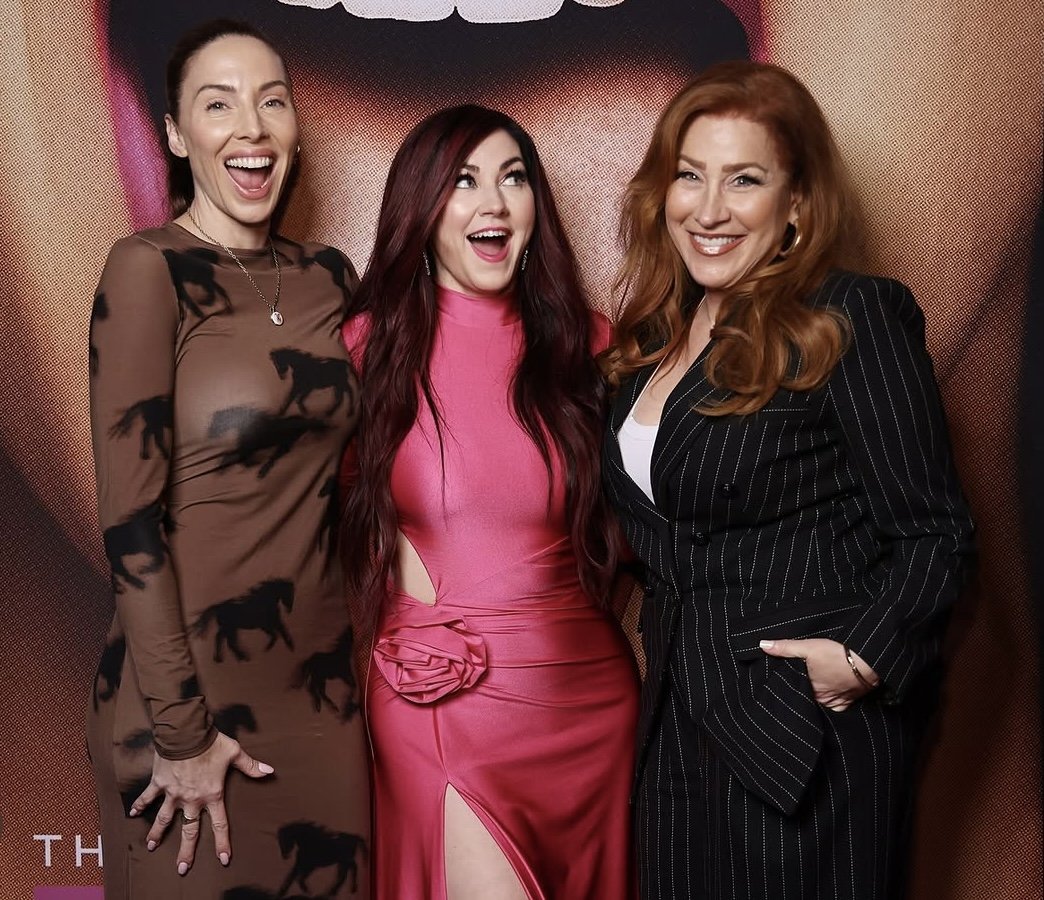
Sara Jaye Weiss/Getty Images for The Pink Pill
LS: When people are coming to you, what are you looking for? What about someone's pitch excites you?
CE: Honestly, it’s their curiosity. I think every question I'm asking is really trying to get to ‘how much do they learn every day? Because there's an openness.’ I mean, you know. We are all entrepreneurial at our core, so many of us, and in this world, particularly. The difference is, ‘Will I be open-minded? Because it will absolutely not be the path that I think it will be.’ It will absolutely not be. There will be a plot twist, there will be a pivot, and I find that when they have this willingness and eagerness to learn every day, they are the right jockey for the assignment, and there's an irrational exuberance behind their idea that lets them, even in the dark days, and there are a lot of dark days of entrepreneurship, get out of bed in the morning and go back to work.
LS: Wow. I love how you put that, too. People don't talk about that enough. I think a lot of times we see the glamorized, glossy version. And it's what everyone's working toward, but people don't see the blood, sweat, and tears behind closed doors. So, how would you advise women who are on that path to keep going? What's going to get them out of bed? What's your advice for those darker days that people don't talk about?
CE: Tune into conversations like this. I'm really not kidding. Find your network to talk to. I really believe that in my darkest moments, the thing that pulled me through was an email from another woman [or] a patient who was kind enough to send me a DM that day. In one interaction, I can be moved right back into the heart of why I'm doing something, and it's such a gift from them. They don't even know they're giving it to me, but I would say entrepreneurship is lonely. If people aren't on that path, it's hard for them to frankly understand your commitment to the cause and all the sacrifice that you're making. So, find your way into rooms of other entrepreneurs, find them on social media, listen to conversations like this. It has a really outsized effect on the perseverance quotient.
LS: It's true, and it's interesting, too, because I think the idea of mentorship, while it's such a beautiful concept, we live in a very busy world. And I think if you've been raised thinking you need to find a mentor. Well, a lot of times that's not how it pans out, but you almost mentor yourself by—like you just said—tuning into these conversations, showing up for yourself, and finding like-minded people who speak to you. So that makes a lot of sense that that's what can keep you going – listening to other like-minded women who are doing it. That's beautiful.
CE: That’s right. There's such power in those rooms. I feel like if we could harness the energy in a room full of female entrepreneurs, we could solve every world challenge. I genuinely do believe that. And I love that you said that, Lindzi. I've always thought mentorship is beautiful, but it's so hard and out of reach in a way, and especially if nobody's doing exactly what you're doing, once you reframe that as ‘my mentors are all around me; they're to my left, to my right, they're the person I sit next to at the store. Wherever it may be, talking to them about the journey really makes a difference.
LS: 100%. Absolutely. What have you learned about yourself over the last year?
CE: I think you know, Lindzi. You’re so sweet. You know that I've just lost my mother. And I've built companies. I've sold companies. I've worried about making payroll as a small business owner. I've fought the government and then persona non grata – nothing will test your strength like grief. It's a new lesson. Lucky me that I haven't had to do this until right now. Sure, [I’ve experienced] grief from not getting to your goals or not getting the achievement that you hope for. But grief in this way, this kind of loss, is so profound. That's my personal lesson. It sort of ties to the professional lesson of what you asked [earlier]. Even [with] the documentary, it’s something that I wouldn't have even imagined in this world. Ultimately, truth prevails, because facts refuse to move. And if you'll just stay with the fact, with the data, even when it is being resisted, mocked, ridiculed, overlooked, ultimately, it does win.
LS: Beautifully put. And as far as the grief piece of it goes, it's interesting because, of course, there are all forms of grief. And you know a bit about my personal journey. I also feel like, yes, there were certainly things to grieve with work [over the years] or this or that. But then life has a way of putting things into perspective. And I also felt like ‘lucky me’ that I made it so many years without knowing that sort of… I don't want to say loss. Because so many gifts came out of that period of time. Although I clearly wouldn't wish it upon anyone. But I think it puts everything into perspective. … So, I love that you touched upon that, and I am so sorry for your loss.
CE: Likewise. You’re remarkable, honestly, what you've been through and to persevere and to create a platform like this for women. Deep admiration from me for that.
LS: Thank you so, so much for saying that. I appreciate it. I'm curious, and you don't have to answer either, but with what you've experienced more recently [with your mother], has it given you a new perspective, even about the healthcare industry seeing it up close?
She nods.
LS: Of course, of course. I mean, I know the answer. So, my question would be—how do you stay hopeful? What do you do with this new information? I know it's still early days. You're in the thick of it all. I mean, myself included. I'm four years out with all things Evan. And I haven't found my answer about where to spend my time [advocating in her honor]. So, I know it takes time to investigate these things within ourselves. But how do you stay hopeful?
CE: I think I stay hopeful because we can all make such a remarkable impact. The gift to me in the Addyi journey… it was a gift to me that I saw how women stepped out of their comfort zone, stepped into a federal agency, advocated, and fought for what was right for them to change what would be for so many others. My optimism [stems from the fact that] I really genuinely believe that every single one of us can make a remarkable individual impact if we'll stick with it, if we'll fight the good fight, if we'll do that. Healthcare is profoundly broken right now. I mean, you know my social media. My Instagram page is an everyday, like, ‘I cannot believe this story. How can this be?’ But I think it all goes to an optimistic point of view, which is… If we can heighten our consciousness to this, if we know wrong is wrong, how do we start to work toward the solutions that can improve this for everybody? My optimism is just [that] I've seen so many individual people make such a large, impactful difference on so many.
LS: Perfect. Beautiful. And then lastly… It's a large question, but what is your ultimate goal? What's next? What’s the big dream?
CE: Gosh, my big dream has always been to revolutionize women's health in so many ways—in how we talk about it, in how we treat it, in the science being given attention for women's health. The professional has remained the same. You know, I'm not done yet. I'm looking forward to that next chapter. I'm looking forward to stirring some more pots. And then the personal is really taking all the lessons that this year is teaching me and applying that to living a better life and really prioritizing the things that matter. So, I think those are my two big audacious goals.
LS: Perfectly put, and same. Same, same. Well, thank you so much for chatting today. It's been such a pleasure. The night that we met, I wasn't necessarily [planning on approaching you]. I can be a little shy in those settings, and I’d just seen the film, and I thought, ‘Oh, she has so many people in this room to see. I'm not going to introduce myself.’ And then you were just suddenly there, and I thought, ‘Okay, I'm doing it.’
CE: I love it. Oh, I'm so glad you did. I'm so glad to be connected. And I can't wait to see what the two of us figure out we might do together in the realm of science and advancing healthcare.
LS: Oh, that would mean the world. Yes, I would love that. Well, thank you so much.