FaceTime with Mandana Dayani
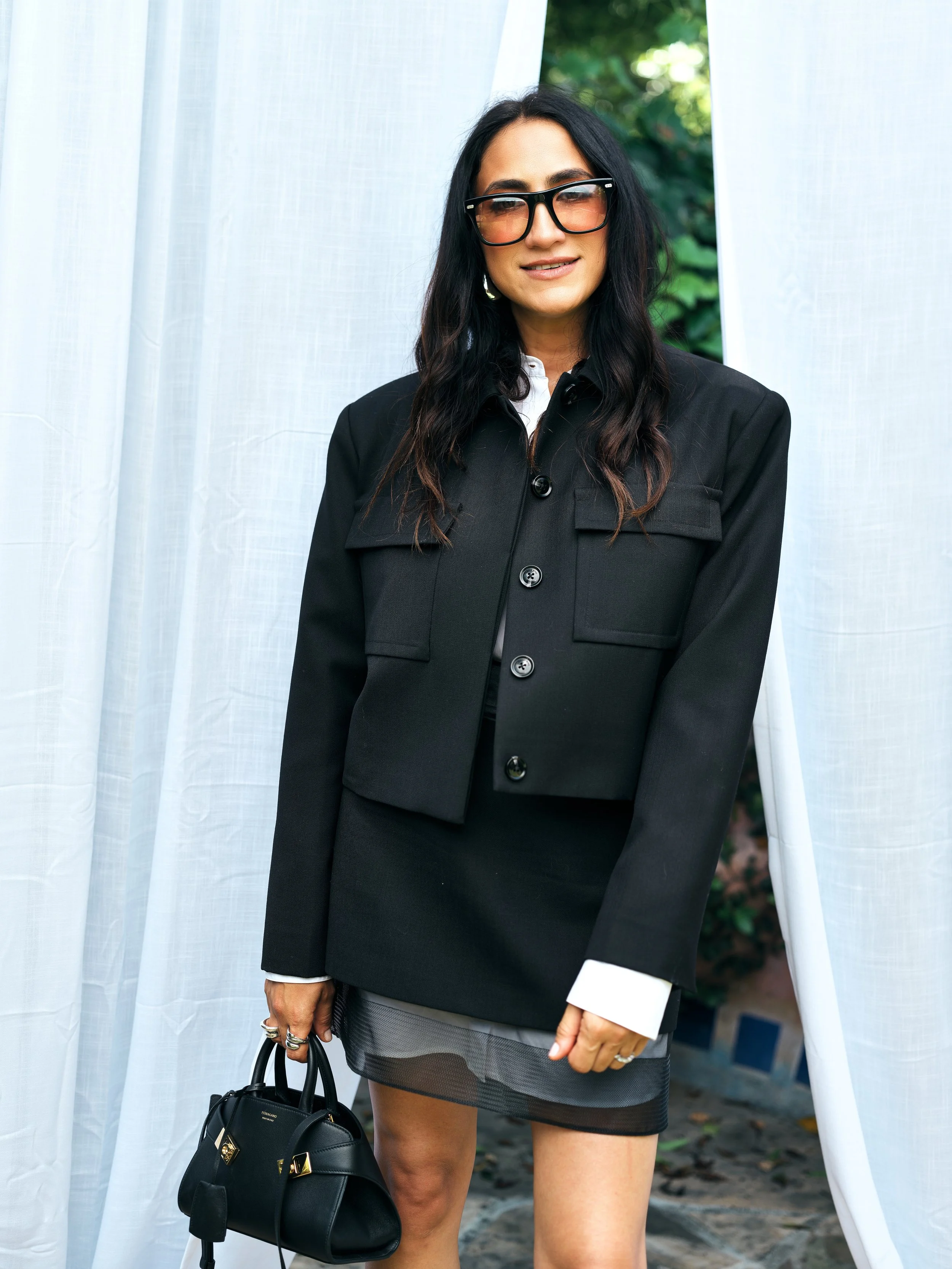
For our latest “FaceTime With,” The Retaility’s founder Lindzi Scharf caught up with activist and entrepreneur Mandana Dayani.
They discussed why Dayani launched her Substack "All of It," how she stays hopeful during dark times, angel investing, and the evolution of her career, which has included roles as an attorney, Vice President of Rachel Zoe, Inc., President of Prince Harry & Meghan Markle’s Archewell, founder of I Am A Voter, and founder of The Calanet Foundation.
Keep scrolling to join their conversation. You can also watch it in full on The Retaility’s YouTube channel.
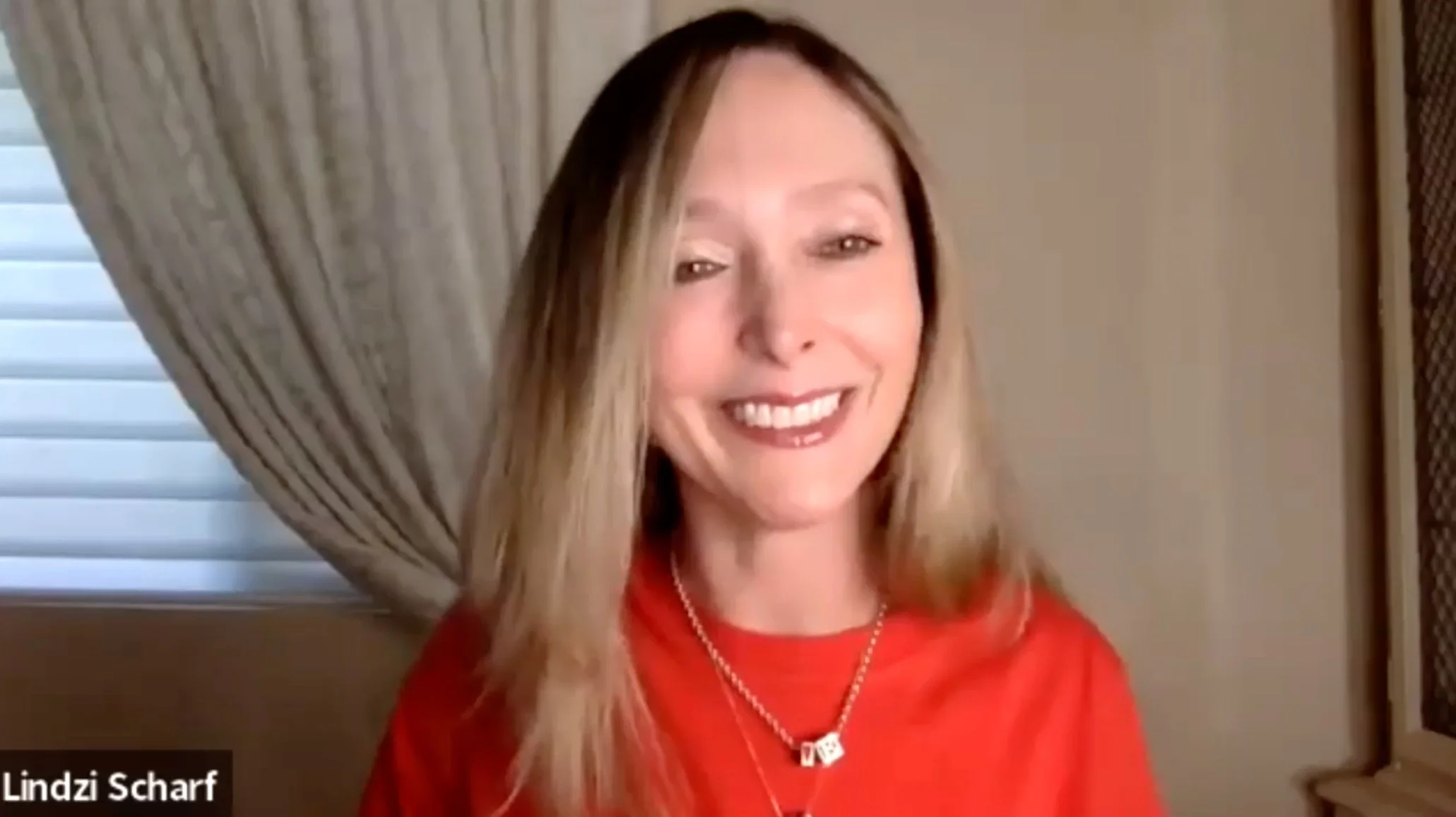
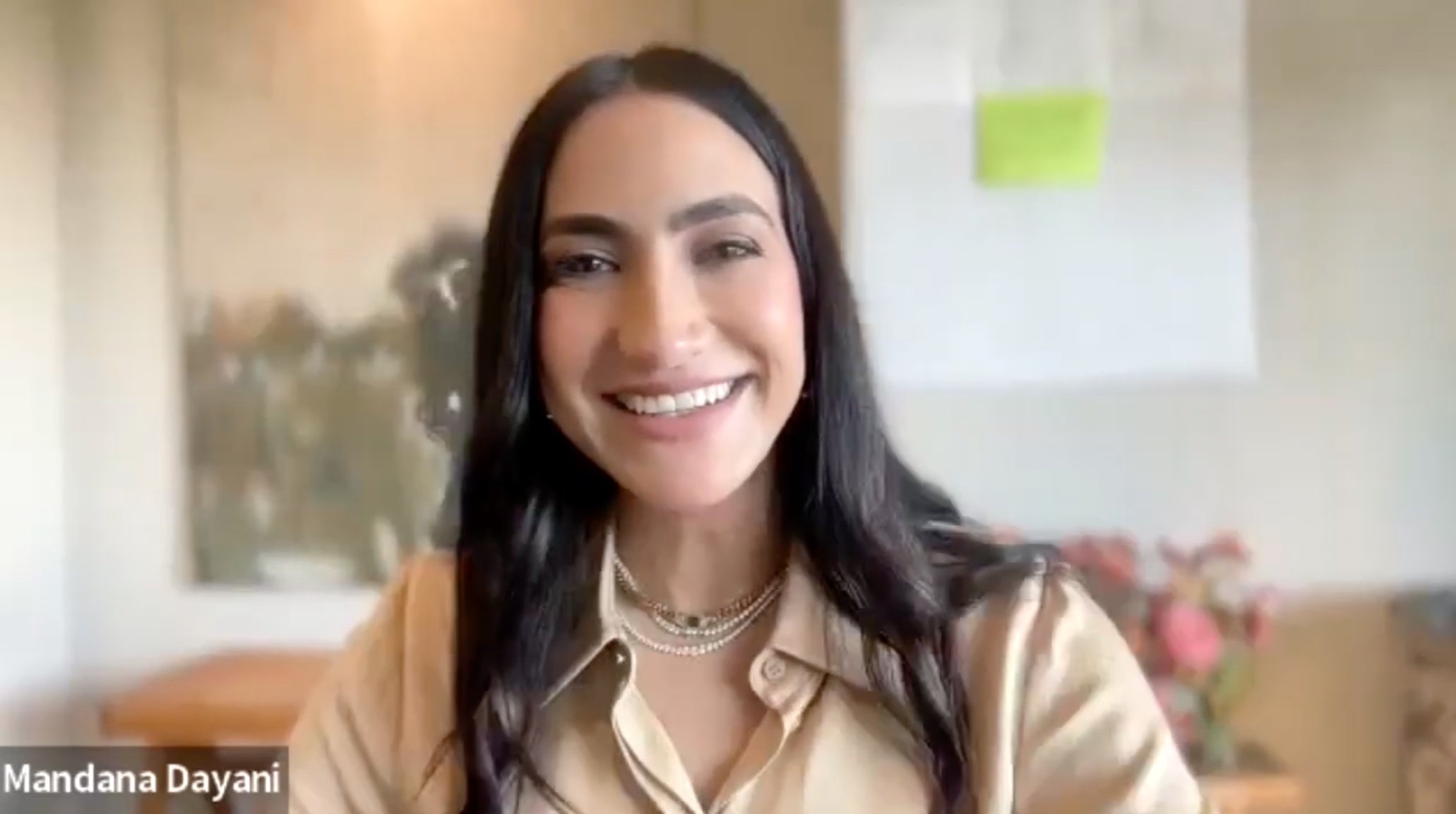
Lindzi Scharf: Hi. How are you doing?
Mandana Dayani: Good to see your face.
LS: Good to see you too. I'm so thrilled to be doing this with you.
MD: Same. Thank you.
LS: The last time I saw you, if I'm not mistaken, was actually at The Retaility’s event, which honestly is half of why I do [them]. The reason I do those is to actually be able to see all the people I want to see.
MD: Isn’t it funny? That's generally when we end up seeing people now?
LS: So let's jump in. I love that you launched a Substack, and I love that you launched “All of It.” So let's talk a little bit about why this felt like the right moment in your life to start a Substack.
MD: I mean, it's funny. I thought about doing it for so long. And I, as someone who builds brands, was so confused by what I wanted to say and what I wanted to focus on. I feel like I've had so many big pivots in my career. So [it was a matter of] trying to figure out which part of me would this Substack be? Is it all about advocacy? And is it about news? Is it about anti-Semitism? Or is it about family? Is it about entertaining? Is it about fashion? Is it about tech and how to be a leader? I don't know. I actually have spent my whole life trying to break out of the boxes that the people and companies and structures have put me in. [I thought], ‘Why am I doing this to myself? And why do I have to choose a part of me or a version of me?’ So I was like, ‘You know what? This is it. This is who I am. These are all the things that I care about and they may not make sense,’ but it felt like [I] finally [have] a place to have a full reflection of who I am, what I'm interested in, what I've learned, and to be able to share [it all]. There are so many parts of my life that are so cool. Not because, I get to go to a party necessarily, which is also really cool. But because, I've met amazing members of Congress and the Senate and amazing scientists through my advocacy work, and I can just text them sometimes—like Phone a Friend [is a column on my Substack]. It’ll end up becoming one of our favorite sections because it's just this idea of, ‘These are real time texts that I'll send to amazing, brilliant people to ask them the most basic question.’ Yeah, it's been really fun.
LS: It’s interesting because you work with brands. You know better than anyone that everyone has their brand's image that they want to present. But I think as individuals, there’s a lot in between all of that. We're still expected to present ourselves in a certain way. And yet there's so much nuance to each person. And I understand. Listen, I relate with that firsthand. I feel like most people do. Honestly, The Retaility, when I started it, it was because to me, it starts with people. It doesn't matter what they're doing. It's about the person behind it. But I do think that's confusing for people, too, because it's like, ‘What is The Retaility exactly?’ It's people. It's about people. And it is about people doing amazing things. So, I’m glad you're here for this today. I also wanted to pull up the specific [posts you’ve written]. The piece that really resonated was ‘The quiet negotiation between joy and guilt,’ [which is your] piece about trying to make sense of these two things coexisting. It's also why independent of all of this, I started a very quiet Substack called Joyful Grief to channel exactly that. It's a lot to make sense of. Tell me a little bit about your headspace when you sat down to write that particular piece.
MD: Shannon Watts, who is an incredible incredible woman and is one of my closest friends, and my mentor in everything that I've built. She's my sanity check a lot of the times. And I kept confronting this… It’s so hard because when there's an issue that I care about, it takes over my life. I'll quit my job [to focus on advocacy]. I’ll dedicate [time]. It just becomes a whole thing. And then there's all of these other moments—you just said—that are so beautiful. And I remember feeling like, ‘Well, that's hard. How can I share my daughter [and] her recital when there's people hurting or suffering [elsewhere].’ And you realize that that is also contributing to [creating a social media cycle] of all of these places feeling like they’re not just toxic, but also so heavy and so hard. And I don't want that to be the only thing I put out in this world, right? It's okay—it’s actually important—that we have joy because [otherwise] you will burn out, right? It's so hard to be an advocate or an activist and do this work all day and show up in these spaces, if you can't also celebrate the wins, have light moments, and have fun and be able to be an actual balanced human. [It became] getting out of [my own way]. I felt like I was such a martyr about it. Recognizing that joy is fundamentally a very Jewish value. That's so important [to] how I was raised. It's such an important part of my family and how we spend time together and the values [I was raised with] and how we've raised our kids. And I felt like I was not putting that [part of my life] out. In a way that felt almost dishonest. I was like, ‘But it's important to me. And I'm holding it back.’ The balance is just so important.
LS: Absolutely. But I also understand where you're coming from because then there's the other side of that coin where so much nationally, internationally was unfolding [that I understand your reticence, too]. And you know, of course, I realize you know my story. A whole lot was unfolding [for me] when my daughter had just passed away. I'm now raising a newborn son, and I'm so grateful. And I threw myself into his joy because he deserved that too. And it was the first time that I felt like I was able to have a pure sense of joy in a long time. And yet the guilt that you then feel for feeling that joy when you realize—what’s going on in the world [at the same time]. There's also that grief that comes with obviously not having my daughter present and all of that. So, I think most of us [understand]. Who in this day and age wouldn't relate with trying to make sense of all these many feelings at once? Which do coexist. It’s important for them to coexist. Obviously. But rhat piece in particular very much very much resonated [with me].
MD: I always think about how we were born in these villages for centuries. My dad's family was born in a small village in Iran. So I think about how we were created. We had these communities of people that we cared about, right? And you all took care of each other and you all knew what was happening in each other's lives. Our bodies and systems were not meant to carry that for the world. Like you are not supposed to know and be upset about a mudslide in South America and famine in this other continent. You should care, but we were never built to hold all of [that] pain. At the same time, all of that information, you were supposed to know, like, the pharmacist next door was having a hard time with his leg and you were going to help him with his groceries. I mean, that was really how we were built. And sometimes I just think it feels too much because it is too much.
LS: My therapist reminds me when we talk about so, so many things. But she says, it's true, we have access to more information than ever. And that's important, but there's a danger on a personal mental health level to having so much awareness because—yeah, it's a lot to hold. Your body is not meant to hold all of that. So, you also wrote about this past year being ‘your year of no,’ which I love. I want to revisit that and how you arrived at that place in your life. Because I think it's a lesson we all need to eventually learn.
MD: It’s funny. The year before was 'my year of yes.’ And that was important. [Or it was] the two years before then actually. And those two years taught me so much. But I felt like the year before I was building five different entities at the same time. I had our kids. There was so much happening, and I was saying yes to everything, and I was on an airplane [all of the time]. I didn't I didn't spend five consecutive days in L.A. for six months. It was just this constant packing, unpacking, moving, wardrobe, dry cleaning. It was so nuts, and I was so burnt out, and I realized, ‘I don't want to do this. I don't know why I just keep saying yes.’ Everyone was like, ‘Can you speak at this thing? Can you come to [this other thing]?’ And I kept saying yes because I think I felt bad. Or also I think growing up with not a lot of money, you're sort of raised with this [mentality of], ‘Who the hell are you to say no to something?’ If someone's offering you something or you have an opportunity to do something, suck it up, you'll rest later, get it together. And I did that so much, and [I felt like], ‘Hustle, hustle, hustle.’ And I [realized], ‘I miss my kids. I miss being home. I love to cook.’ All of the things that nurture me and keep me really present and grounded were completely gone from my life in a way. And I started this year with [feeling] like, ‘I don't want to do anything I don't want to do. I'm not going to do anything unless I actually want to, or it’s really critical to my work.’ But it's been honestly amazing.
LS: [Your piece about that] was really great. There's a power in saying no. And to your point, for me, truly, the art of saying no came about [out of] necessity with life unfolding with Evan. [There were a lot of] things that I honestly should have been saying no to earlier in my career, but didn't feel like I had the ability to. Especially because I've been freelance for most of my career. You feel like you have to keep saying yes because that's how you get the next opportunities. You just keep saying yes. And I couldn't keep saying yes [as things unfolded medically with my daughter]. And saying no led to the opportunities or the things that I [previously] would have to chase instead—that were much more impactful.
MD: The weight of should is so much. As someone who's been a people pleaser and wants people to be happy and doesn't want to disappoint anybody, [there’s] this unknown of like, ‘Oh my God, if I don't go to this thing, I’m not gonna meet the person that's going to blah blah blah.’ I just think we put so much weight on the potential of what this could be or [have this thought] that we have to. Or [that fear that] everyone’s going to be there, [without putting] enough [consideration into] the value of our time.
LS: I think it’s—once again, that word that we keep using—balance. It's finding the balance between [the two]. I don't know if you know Rachel Goodwin. She's a makeup artist. But she also has a book that she's writing right now that's going to come out because she has a fascinating backstory. But I still hold on to advice that we discussed during the piece I did on her. She said she only takes a job for one of three reasons. One, if it's for the art. If it's for the art, great. Of course, there's also commerce, [which is obviously] important. And then [if it’s for a] relationship. But if it's not one of those three things she says no. I really took that to heart. I think that's actually quite helpful advice when you're navigating what makes sense with opportunities and whatnot. I also wanted to discuss with you… We met during a very meaningful time in my life [when] I was just trying to make sense of life and didn't know what the next day looked like [by virtue of things unfolding with my daughter, Evan]. And I also remember you were so sweet. I think you commented on Evan or something [on Instagram]. You [were like], ‘What a cute baby.’ I hadn't yet discussed with anyone what was unfolding in our world privately. But then after we did have that conversation, you heard I was going down the road of IVF [and were encouraging]. How meaningful that was because [it showed me] you don't just talk the talk. You follow through. You had said, ‘If you need anything on that front, I've been down that road.’ And I still remember when I was in the thick of navigating the IVF process, I had texted you [about] something. And instead of texting back, you picked up the phone. You called [me immediately], and you're so busy you probably don't even recall. But for me it was so meaningful, and it’s such a lesson to all of us. Pick up the phone. You never know how badly someone may need that in any given moment. So I was curious, you show up for people. You really show up for people. Where does that attribute come from? And also, who has done that for you in your life?
MD: First of all, thank you. That means a lot. I've always been such a convener, right? People are so important. Gathering has always been the center of everything to me. And I think part of that is thinking about the Shabbat table every Friday and family, people, friends, this open door. There's always an empty seat, people just come in. Building those relationships and caring for those people [is important]. And then they become your village in a way and how much we how up for each other. It's funny. Being there for people has always been so important to me and having real relationships. I'm really bad at bullshit relationships and pretending to care about people. I'm going to be really honest. I'm going to be really blunt. I may not be for everybody. I just feel like, ‘We’re going to get through it together. I’m going to come over. We’re going to duke it out. It’s going to be great.’ That has gotten me through so much. And the people in my life, my family, I have the greatest friends ever. Even as I say this, I've also been the person that was always like, ‘I'm not going to have a birthday party because no one's going to come,’ or ‘What if nobody comes?’ [I do have] that panic and anxiety, [but] then I'm always hosting things that are not for me. And everyone comes, right? I remember when I was starting I'm A Voter, and I was sending this email out to hundreds of people to ask them to support [it]. Not donate money, but give us access. And I was like, ‘Oh my God, no one's going to reply. This is going to be so hard. How am I going to do this? How am I going to deal with this rejection and the failure?’ I'm so afraid of failure. And everyone showed up. Everyone was like, ‘Thank you for asking. No one ever asks.’ And they showed up in such big ways. I think I learned so quickly how much people want to be included and how important it is to include people and to stack the deck. I always say, ‘Build your bench.’ Who are the people that you want with you through all the things? Those relationships I had changed my life forever.
LS: Absolutely. I Am A Voter, I would imagine, had to be a turning point in so many ways too. Even just witnessing it from a distance, it seemed like you were coming into contact with so many people who clearly are like-minded because they're getting behind what you're doing. But then it's like anything—colleagues become friends. In what way was I Am A Voter a turning point for you professionally, personally? D) all the above—All of It, as you say.
MD: I definitely think it was. They say, ‘Follow your purpose and you will find your people.’ So I do think it really helped me find my people. But I think for me personally, there was this [personal connection to the issues at hand]. Being an immigrant, I spent so much of my life… {phone rings} I’m so sorry. Let me just cancel [this call]. My husband has an override on everything, so it actually rings even when it's on silent.
LS: You’re like, ‘Nope. Not now, honey. I love you.’
MD: I think as an immigrant, you spend so much of your life, or at least I did, trying to figure out what people want you to be, what it means to be American, how to conform to spaces, how to advance professionally in situations that you probably have no business being in. I also was taught to be a good girl. Between all of these traditional backgrounds that I come from and religious backgrounds that I come from, you don’t rock the boat. Don’t piss people off. You don't need to share everything with the world. I had created what I thought was this perfect version of myself that could show up in any meeting and razzle-dazzle. I was everyone's favorite, and I could be whatever I needed to be in any room and [had created] this sort of endless projection of perfection. It was slowly literally killing me. It was really hard and I didn't realize how hard it was. When I Am A voter started, I remember going all in. This was my whole heart. And there was nothing I cared more about because of the child separation policy and everything that was happening and how important it was to me. I remember being like, ‘Everything I'm about to say is going to piss off at least half of the people in my life and my family.’ They do not agree with this. And I had no idea how I was going to respond to that as, again, someone [who] is a people pleaser. And I swear to you, this is what I think people feel when they go skydiving. It was the most exhilarating, liberating feeling of my life to just be free and say, ‘This is what I think. And honestly, I don't give a shit how this lands on you.’ And that freedom that came with being in my own body and my own thoughts and my own beliefs completely change everything about my advocacy, how I show up, how I show up in every professional impact, everything I do. That was wild. That was probably the biggest turning point in my human development.
LS: Listen, we have many of those moments along the way, but I feel like if we looked at the trajectory of [your] last decade or handful of years, it makes sense. That seemed like it would have been a big moment in a lot of obvious ways and some less obvious ways. Also, I find you fascinating because you wear so many hats. You’ve worn so many hats, and not everyone gets to do that in their lives and in their careers. Because back to the box thing, people love to—we’re sitting here in boxes today on Zoom—but people love to put us in boxes. In your career, by following your curiosity, you were able to go from lawyer to working with Rachel Zoe to I Am A Voter, etc. What do you attribute that? And what phase of your life and in your career are you now?
MD: I think at the center of it, I've always loved building brands. I started my career as an attorney, but I worked in hospitality with the biggest hotels and started understanding essentially the value of IP, but also how a brand is valued and experienced and what that looks like. And then I went from there to work as a commercial talent agent—working with the most high profile celebrities and brands and figuring out how you quantify that, what that looks like, how you measure success, how do you pair them [with the proper partnerships and people], what it means, and then how do expand? And then Rachel [Zoe] was a client, and we worked together and then I went in house, I did that. Then I went to tech and then I went to I Am A Voter and then Archewell [as president of the media and philanthropic company founded by Prince Harry and Meghan Markle]. And then the last two years building CalNet Foundation and focusing on anti-Semitism. But that also was like a brand incubator—that’s how I treated it. We raised funds. We built them as verticals. They were all acquired by different orgs. The fundamental way that I show up is thinking about [and] understanding consumers and what makes them feel something—how you move them, how you break through the noise—using visual mediums and storytelling. Every time, everywhere I was, the tech company, at Rachel’s… You know, I was producing TV shows at Archewell, the same thing, right? There was always a component of impact, some version of storytelling and some version of consumer presence. To me, those all create a beautiful ecosystem. Even when you look at I’m A Voter, there was so much merch. There was so much video. There was so much celebrity and hype. The work we've done the last few years has been so incredible with Calanet. But I’ve invested in a ton of female-founded companies that I love. I’m continuing to do that and [I’m] probably going to be doing more and more back in the brand space moving forward. That is how I show up.
LS: There is a common thread through it all. It may not make sense to someone who doesn’t see the common thread, but there is certainly a common thread. And I did want to ask you, because I know that you're an angel investor, how did that piece of your life come about? And what do you look for when you're investing? That’s an interesting world that I know nothing of, and I want to learn more.
MD: There’s usually [a component of], ‘What are they solving? Who is the founder? How much belief [do you have in them]?’ You really are investing in a person, especially when it's early stage and [you’re considering] their ability to deliver, move, inspire teams, and execute. [And it’s about] the product itself. I see a lot. I don't always have time to spend enough time on it. Some of the brands that I've invested in and [I’m] so, so proud of—they’re been amazing to witness and watch. It's been great.
LS: Love that. And then on top of that, you launched One Mitzvah a Day. I wanted to also discuss the importance of your faith and why you're combating anti-Semitism when a lot of people are staying quiet and what that means to you.
MD: As someone who'd worked in advocacy, I believed that there was a way that we do things. I was so involved in so many different movements and so many different issues. Because they were the right thing to do at the time. I never did anything because I thought someone was going to do it for me later. [But] when October 7th happened—you have to understand, fundamentally, I’m someone who fled my home [as a child]. I can't go back and the only reason I literally believe—as someone who is Jewish, that I'm alive and safe today—is because of Israel. My existence and safety is inextricably linked to this territory. And when I woke up and watched the events of October 7th unfold… At the time, I thought it was a terrorist attack. I was watching people being brutalized in the most horrific ways humanly imaginable. I opened my phone and went on Instagram to try to get information. And I immediately, day one, noticed the communities of people that I'd spent my life as an advocate building were repositioning the terror that I was watching and providing context to it. …. That feels not normal. I think I registered, ‘Oh my god, you’ve read and learned about anti-Semitism your whole life, and it's the virus that mutates.’ It’s part of every generation and it's been there for thousands of years whether people want to gaslight me and tell me it's not. I felt like, ‘We fled Iran. We got over it. We live in L.A. It's fine,’ and then you're like, ‘Oh my God. No, it is here. It is so viscerally in my face, embedded in people that I looked up to and revered.’ I know that sounds weird, but that shattered my heart because it also shook the oundation of what I thought was my community and the people that I respected. And I went to Israel three weeks after that attack and seeing what happened [broke my heart]. [It felt] like, ‘There's nothing else in my life that mattered at that point than focusing on anti-Semitism.’ Because I couldn’t—I can’t—let my kids [have it] happen to them what happened to me. And so I started immediately raising funds, putting together teams and working on this issue. I've traveled to campuses, I've spoken with students. I also helped incubate and launch two incredible campus anti-Semitism projects. When you hear the stories and see with your own eyes what is happening, it is absolutely impossible to comprehend that it's real. It's really crazy.
LS: You [often] talk about hope and joy and all these things that are an important part of being an activist. I mean, how do you stay hopeful? You have two daughters. What do you tell your kids?
MD: Well, two things. I think to be an advocate, you sort of have to be a hopeful idiot, right? You just have to wake up every day and believe the world can be better. If I show up and everyone shows up and everyone does a little bit collectively over time, things will be better and they will be. That's how change has happened. It's always been incremental and it always required people showing up. I would say now people think activism is [like Amazon] Prime. It's not like you do something and two days later it shows up at your doorstep and the change is done. You have to show up over and over and over again, right? So I understand that is part of the process and that hope is foundational to just continuing to show up. With my daughters, we talk about this a lot. I mean, literally my daughter walked home one day and opened the door and was like, ‘Mom, why does everyone hate Jews?’ Because there's protesters holding up Nazi signs in L.A. And I remember looking at her and having this conversation about, ‘The media and algorithms are always going to show you the person that drove their car into the house.’ The most extreme, crazy things. And the people sitting in their kitchens in Tennessee having dinner are not on the news. The majority of the world is going about their lives, not thinking about us, not hating us, trying to figure out how to pay for food and school and make sure the kids are safe and loved. And I do believe that the majority of the world does not subscribe to the extremism that I am fighting. But I know that because the extremism that I'm fighting lives and breathes within these institutions that are so important, how fast it becomes. What I experienced as a child—I don't think it's ever going to go away. I don't know that it's ever going to be over. But there is no way that I'm going to let what happened to me as a kid happen again.
LS: That's the engine that keeps you going. I mean, you have no choice but to stay hopeful when it's a matter of surviving. Then lastly, I love that last year was your year of no. What is this the year of for you? Do you know yet? Or is it one of those things where you can only ever look back upon what the year was?
MD: I think that this year is focus. The last spread out across so much. [it’s also the year of ] presence. And joy—I would say [those are] the three things that I'm spending the majority of my time right now orienting, and [I’m] making decisions through that lens. What are yours?
LS: As you're saying that, I need to relearn presence. It’s interesting because… I wrote [about that back in 2020 for the L.A. Times]. I only ever started writing about my life [because of my daughter, Evan]. I never would have done that before. For me, you only put words into the world if they matter, and I enjoyed telling other people's stories more so than ever tapping into my own. But when I realized I was my daughter's voice, that's when I started using my voice. Because you’ve talked [in the past] about ‘the accidental activist.’ I don't view myself as an activist. I'm just a mom who wants to keep talking about her daughter and her legacy and doing what I can for her community. But one of the first essays I ever wrote was about presence and how she taught us to be present. And I think what's so interesting is—you think, ‘Oh, I learned the lesson. I did it. I know how to be present now.’ And what I didn't anticipate is how difficult it obviously is to stay present when you're not in your daughter's presence. And so it's something that I think we all can [keep relearning]. Every lesson. You’ve never fully learned a lesson. You have to keep learning them. So, gosh, I should add [presence] to my list because I do have awareness [but it’s a muscle I need to keep exercising].
MD: I love that.
LS: We have to keep learning to be present. But, but otherwise top of mind is… This is the year of doing uncomfortable things. I don't even know exactly what that looks like yet.
MD: That was my year that led me to my year of no. But it was the best year ever.
LS: That’s good to hear. I mean, it's important. And I do have a sense of what some of those uncomfortable things are, but you know, we'll see. That’s it for me.
MD: I’m so excited for you. Thank you. I'm so happy to see you.
LS: I’m glad we did this. I swear I have to schedule these because otherwise I never get to catch up with anyone these days. I feel like we're all just running around.
MD: So it's good to see you. Bye!